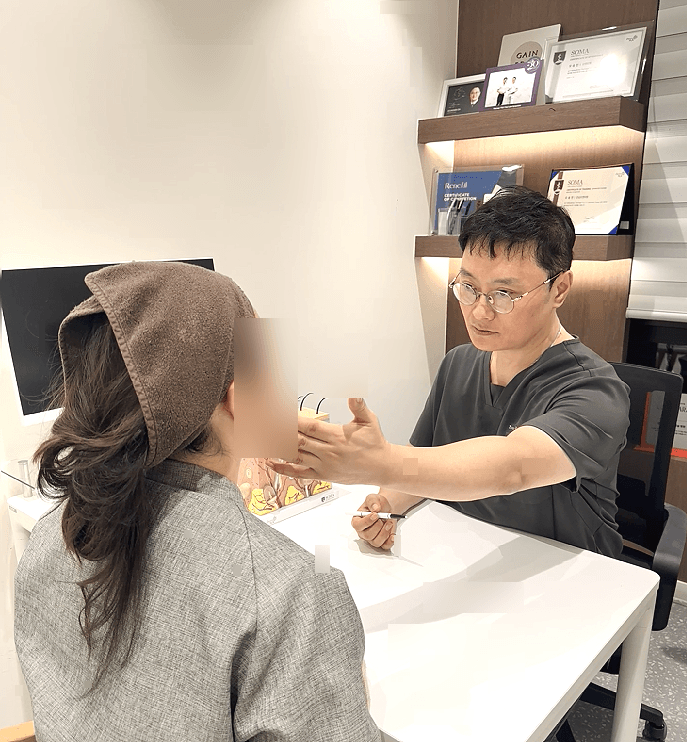
Many people visit for consultations because the center of their cheeks looks heavy and their perioral lines have blurred.
They often say that if they gently lift their cheeks with their hands in front of a mirror, their impression changes, but when they let go, their cheeks sag again.
At this point, the approach changes completely depending on whether the cause is on the skin surface or deeper.
Take just one minute to read this.
At what depth is buccal fat located?
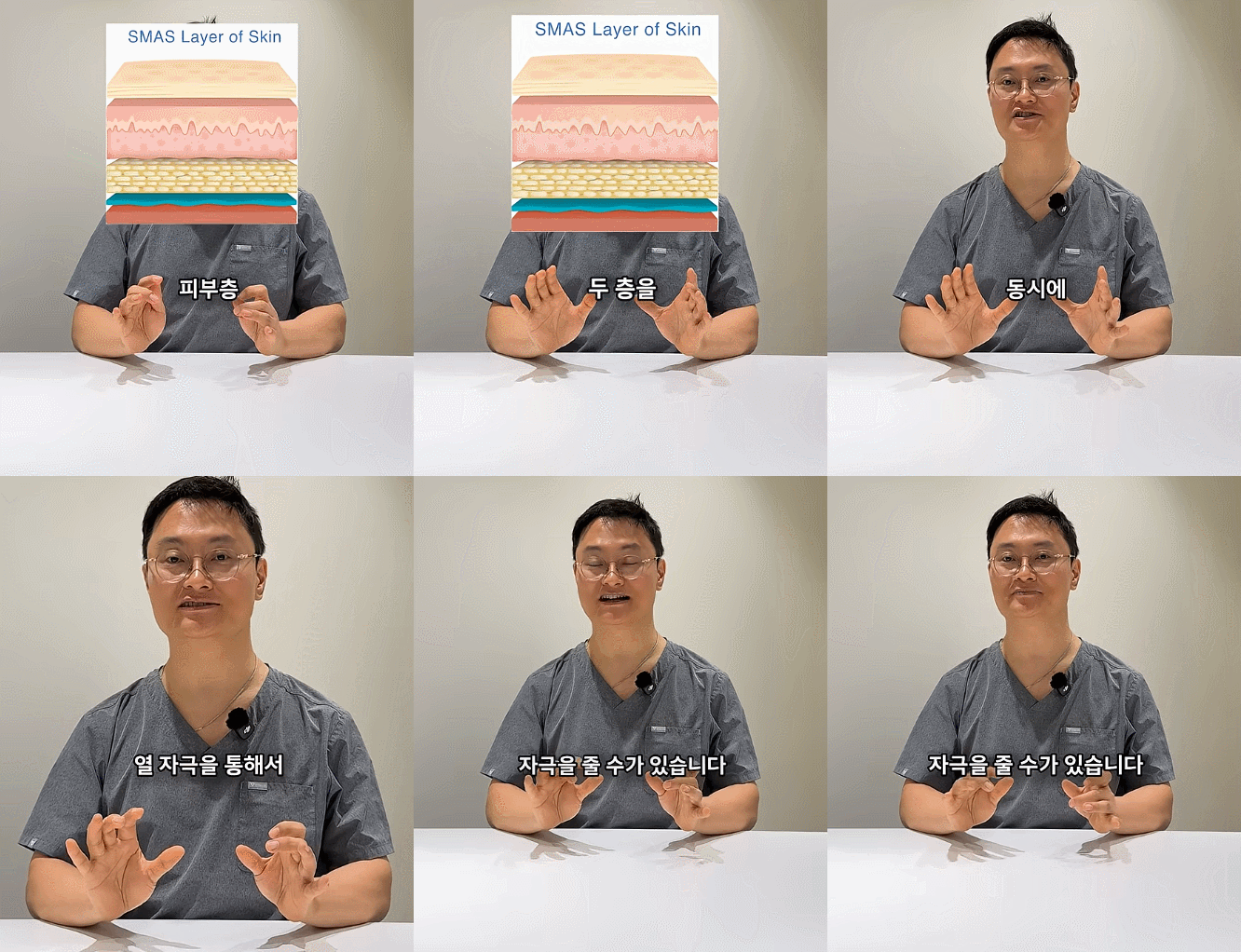
Buccal fat refers to the fat located inside the cheeks, close to the fascial layer (SMAS). Its location differs from the superficial fat directly beneath the skin.
As we age, if the structures holding this fat loosen, its weight can shift downwards. As a result, perioral wrinkles may become more pronounced, or the jawline may become less defined.
Why addressing only the surface may not be effective
If a closet door sags, simply wiping the handle won't change anything. If the hinges are loose, you need to look at the hinges.
Buccal fat is similar. If the point where the weight is concentrated is in a deeper layer, the scope of what can be achieved by addressing the skin texture or fine wrinkles on the upper layer may be limited.
Of course, if your concern is the surface, such as skin texture or pores, a treatment that addresses the surface may be more suitable. The first step is to determine which layer the problem is in.
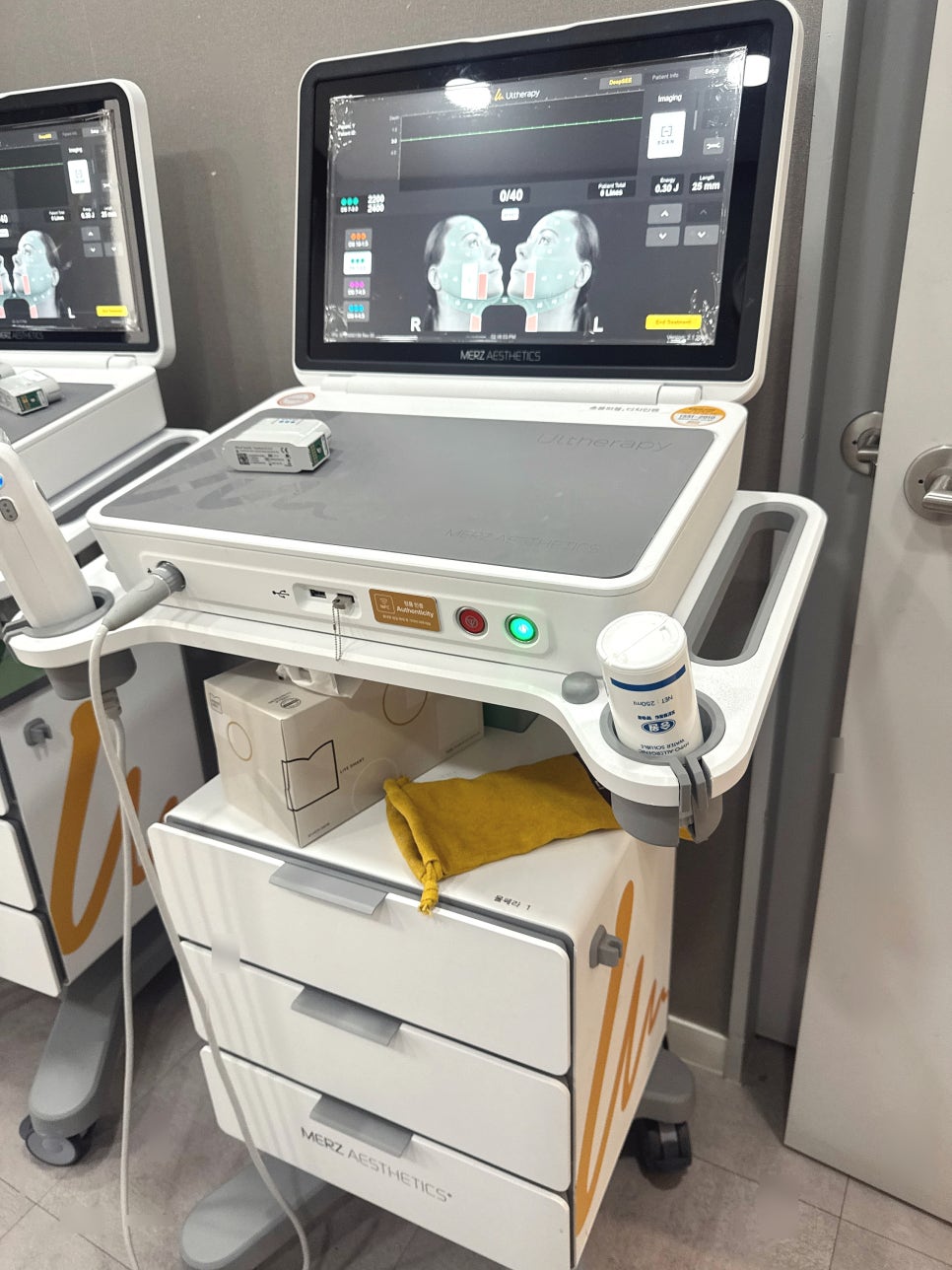
The background for Ultherapy PRIME being discussed here
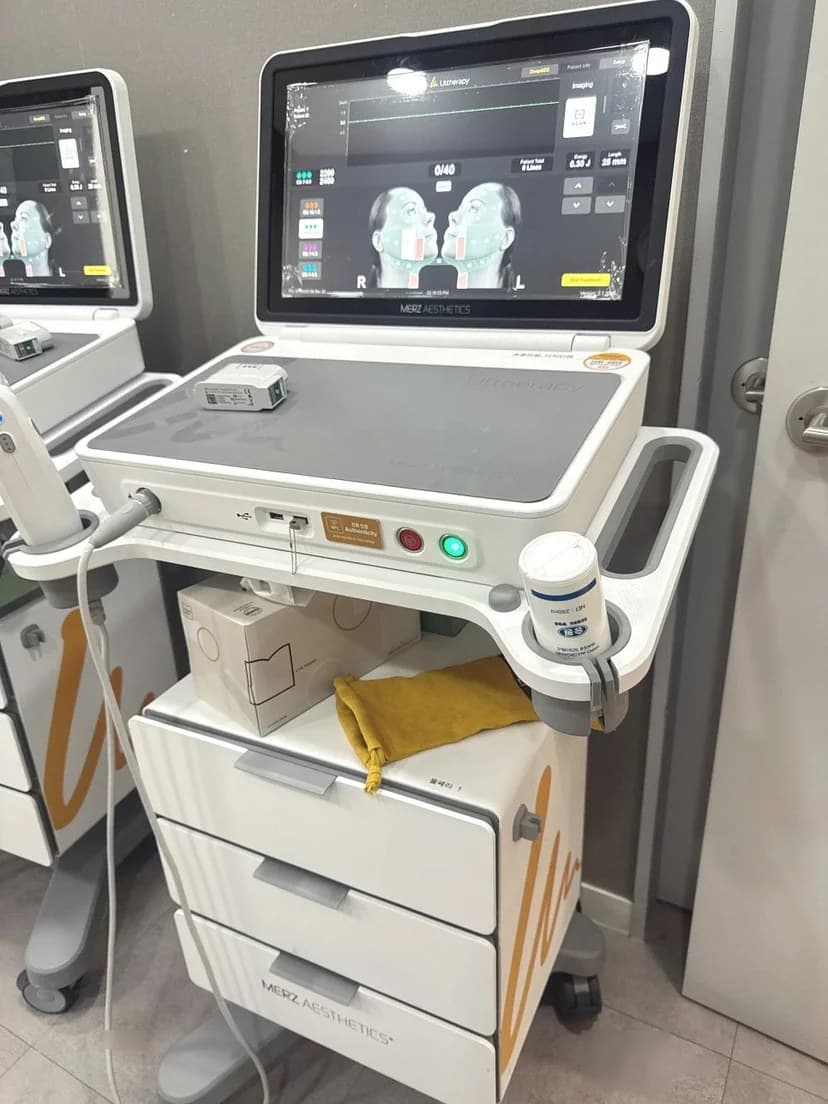
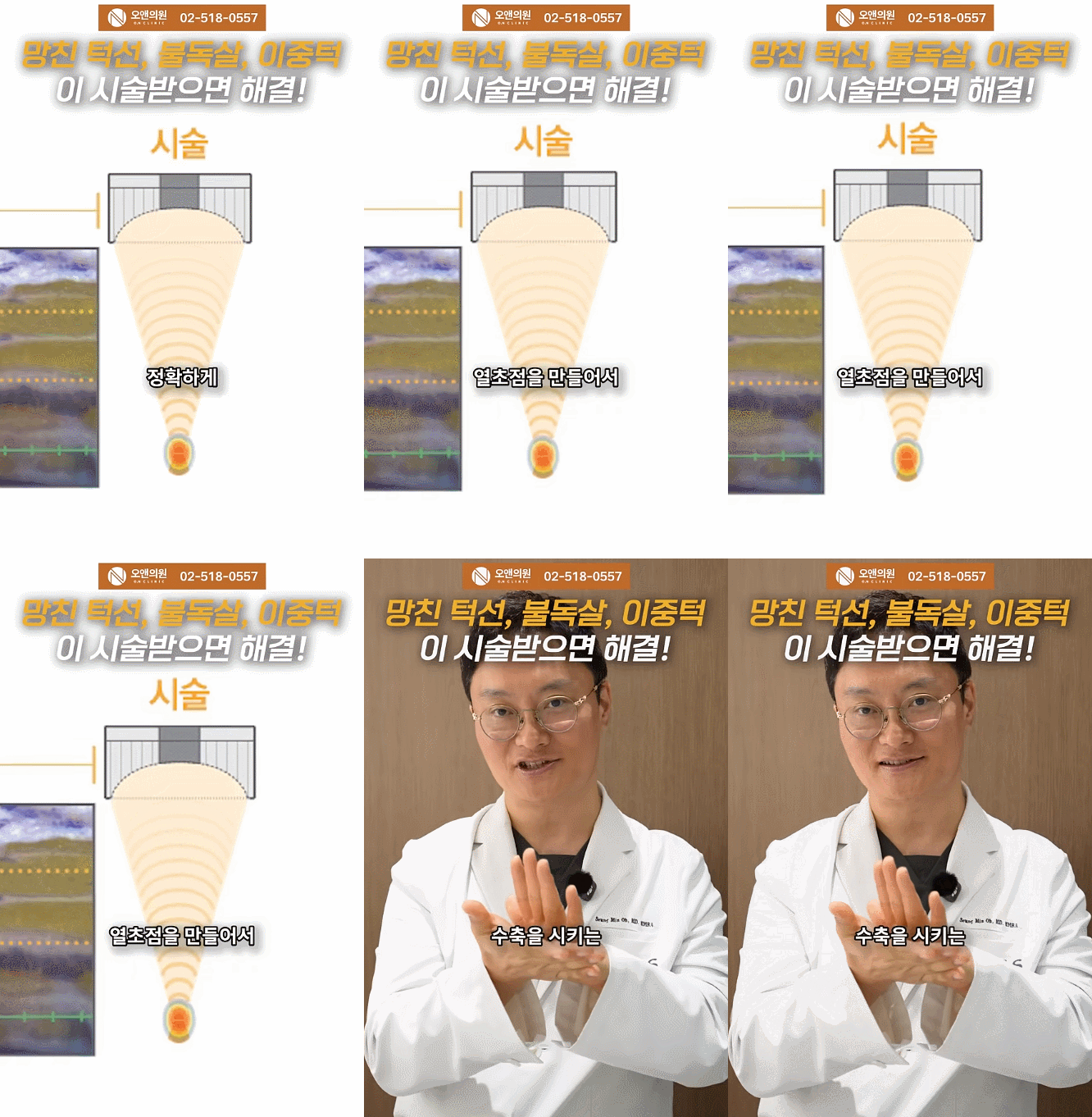
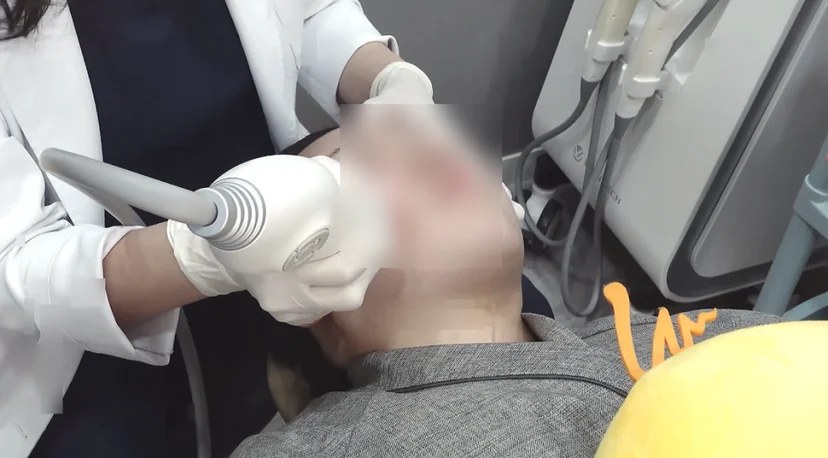
Ultherapy PRIME uses focused ultrasound to generate heat at a specific point. The fact that this focus can be precisely targeted to the depth of the fascial layer aligns with the issue of buccal fat.
In other words, it's not about the equipment being superior, but about whether the depth you want to address matches the depth reached.
Furthermore, during the procedure, the layers can be viewed on an ultrasound screen. Since skin and fat thickness vary from person to person, the same settings may not reach the same depth. Therefore, the process of visually confirming and adjusting is meaningful.
Summarized by layer
| Concern | Layer where weight is concentrated | Approach |
|---|---|---|
| Skin texture, fine wrinkles | Surface | Treatments addressing the surface |
| Sagging cheeks, blurred perioral lines | Near the fascial layer | Treatments reaching that depth |
| Hollow cheeks creating shadows | Volume loss | Consider a filling approach as well |
It is common for these three issues to be mixed on one face. Therefore, many consultations are not straightforward.
Why the same procedure yields different results
The degree of sagging, the amount of fat, and skin thickness vary from person to person. This is why the same procedure with the same number of shots can lead to different perceived results.
If volume has already decreased and only the pulling aspect is strongly emphasized, the face may appear gaunt. Conversely, if volume remains but support is loose, starting with a filling approach may make the face look heavier.
This means that increasing intensity is not always the answer.
What to expect regarding recovery and progress
On the day of the procedure, you may experience warmth or numbness, and swelling or a feeling of pressure may persist for a few days afterward.
It is too early to judge the results at this stage. Changes in elasticity tend to appear gradually over several weeks, so it is more accurate to observe them after the swelling has subsided.
Swelling, erythema, and pain may occur, and the degree and duration can vary from person to person. It is safe to consult with medical staff before proceeding to confirm if it is suitable for your condition.
What to confirm during a consultation
Confirming these three points—whether your sagging is a surface problem or a deeper layer problem, whether volume loss is also present, and which depth will be targeted—will make it easier to follow the explanation.
It is more helpful for your decision to ask which layer is being treated and why with that intensity rather than just the equipment name.
If you want to broaden your criteria for choosing Lifting & Tightening, you can also refer to the article Criteria for Choosing a Gangnam Lifting & Tightening Dermatology Clinic.

Frequently Asked Questions
Why address deep layers for buccal fat sagging?
Because the fat that carries weight is close to the fascial layer. Approaches that do not reach that layer may have a limited scope of treatment.
Can Ultherapy PRIME alone resolve the issue?
It depends on the condition. If loose support is the primary cause, changes may be seen with that approach alone, but if volume loss is also present, a filling approach may be considered together.
Does increasing the number of shots improve results?
Numbers do not necessarily correlate with results. The primary consideration is which area is being treated and at what depth. If performed excessively when volume has already decreased, it may result in a gaunt appearance.
Are there any special precautions during the recovery period?
It is best not to judge the results during the first few days while swelling remains. If you have an upcoming event, it is advisable to check in advance to ensure the recovery period does not overlap.
I received a surface treatment, but the change was minimal.
It is possible that the layer of concern and the layer of treatment were misaligned. Reconfirming whether the weight is concentrated on the surface or in the deeper layers can help guide your direction.
Visit and Consultation Information
O.N Clinic is conveniently located near Gangnam Station, making it easily accessible by subway.
Determining which layer to treat and whether to address volume together is more accurate after checking your skin condition. For any questions, you can easily inquire via Chat with us now.
Author: Dr. Oh Seung-min (Representative Director of O.N Clinic, graduated from Seoul National University College of Medicine, Academic Committee Chairman of the Korean Laser Dermatology and Hair Society). For detailed credentials, please refer to Meet Our Team. First published 2026-08-15 / Last reviewed 2026-08-25
This article is for general informational purposes only, and appropriate treatment and results may vary depending on individual conditions.