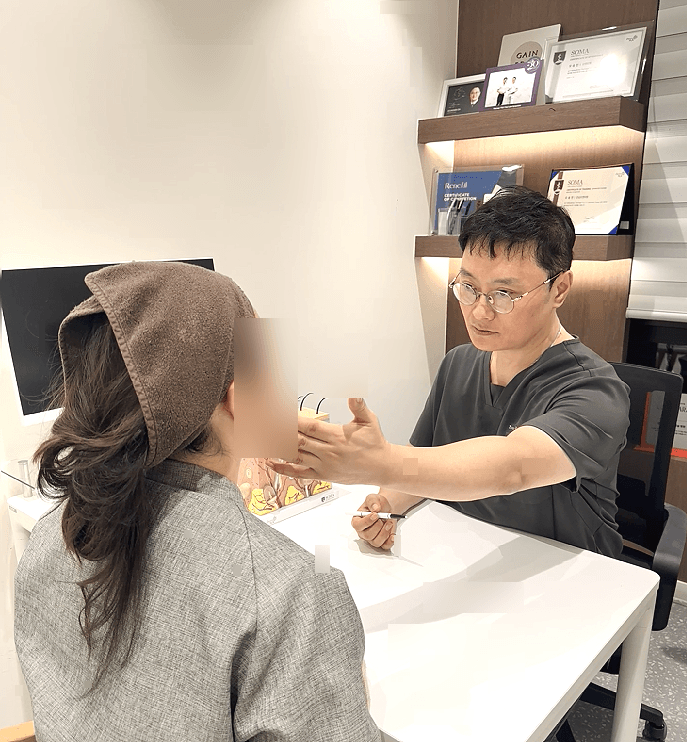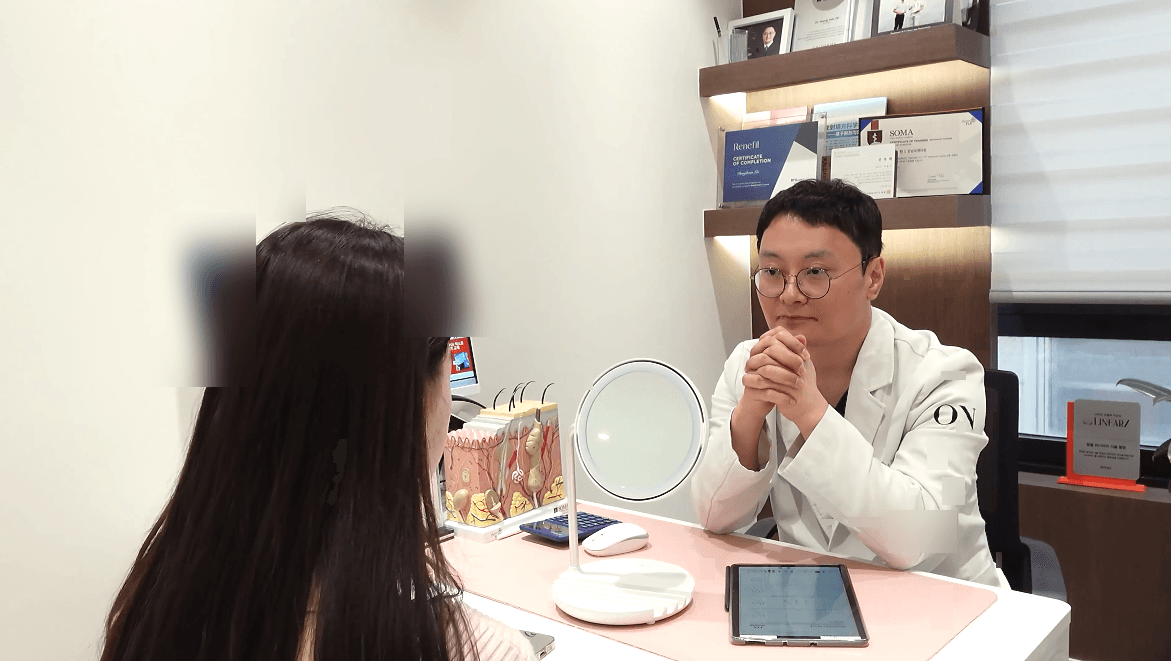
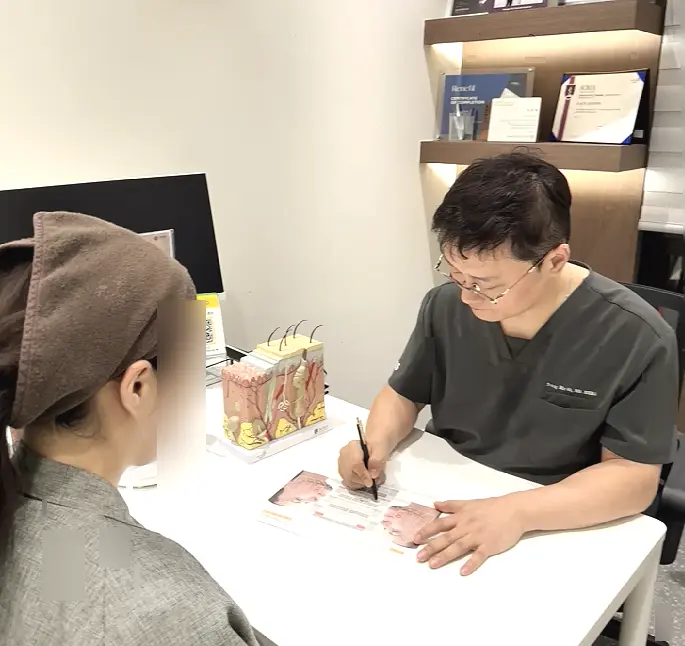
When patients in their 20s ask about Oligio in the clinic, I first consider what kind of stimulation is suitable for their current skin, rather than how high to set the intensity. Monopolar radiofrequency Lifting & Tightening has relatively little burden for returning to daily life and naturally induces collagen production. For prevention and maintenance purposes in people in their 20s, a design that is not overly aggressive tends to determine satisfaction.
Take just one minute to read this.
My skin isn't sagging yet, so why should I consider a procedure in my 20s?
Collagen is known to gradually decrease from the mid-to-late 20s.
Even if your skin isn't noticeably sagging, approaching it from a perspective of prevention and maintenance, taking care of it before elasticity loss fully begins, can be one method.
Even for the same Lifting & Tightening, the goal varies by age group.
In the clinic, I explain this difference as follows:
| Category | Focus of Approach | Other Factors Considered |
|---|---|---|
| 20s | Proactively manage healthy collagen and maintain skin texture and elasticity | Pores, skin texture, subtle loss of elasticity |
| 30s-40s | Correcting already diminished elasticity | Sagging, volume changes |
For skin in the 20s, we don't just look at elasticity, but also examine pores, skin texture, and even very subtle loss of elasticity.
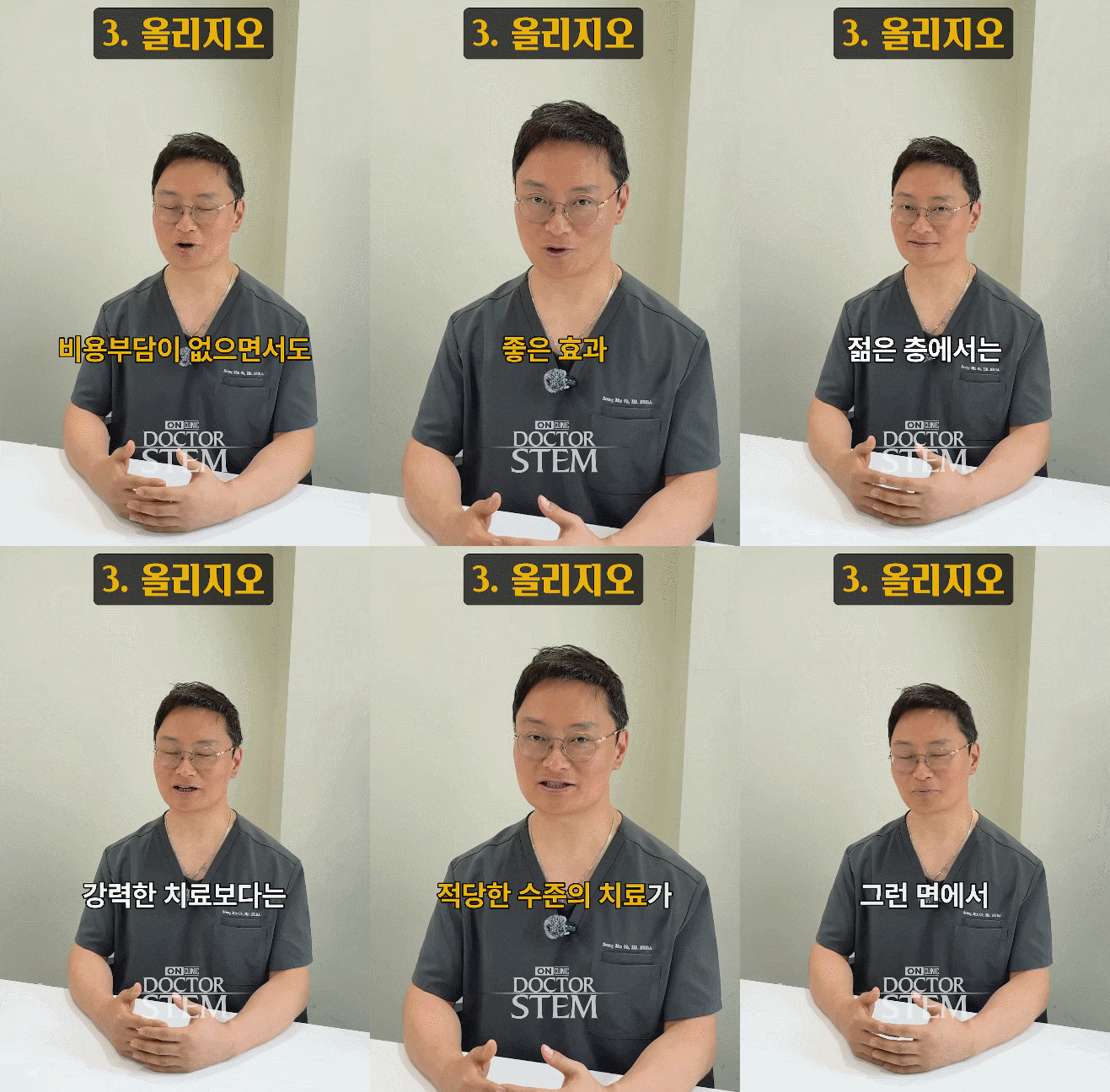
Rather than aggressively lifting with strong stimulation, the basic principle is to naturally induce collagen production with an appropriate intensity that matches the current skin condition.
The reason why treatment directions differ by age group is explained similarly in the clinic's criteria for dividing concerns into three categories even for people in their 30s.
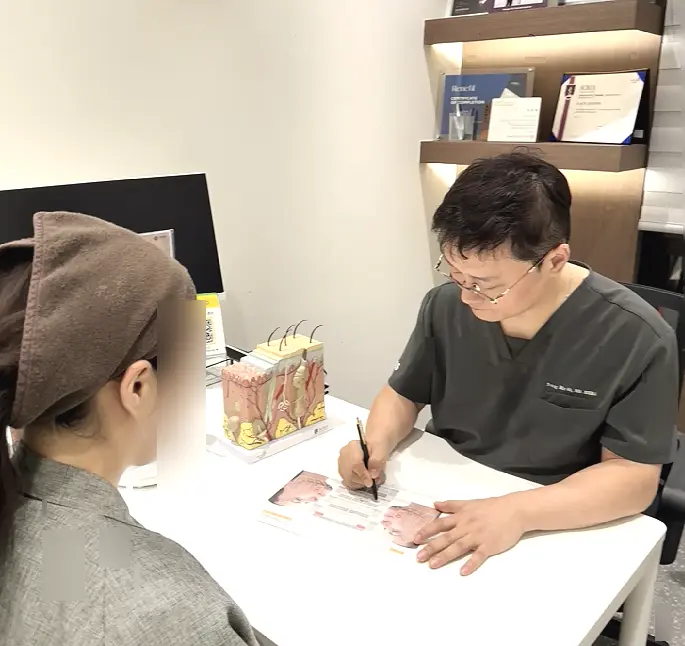
Why is Oligio considered the first Lifting & Tightening for people in their 20s?
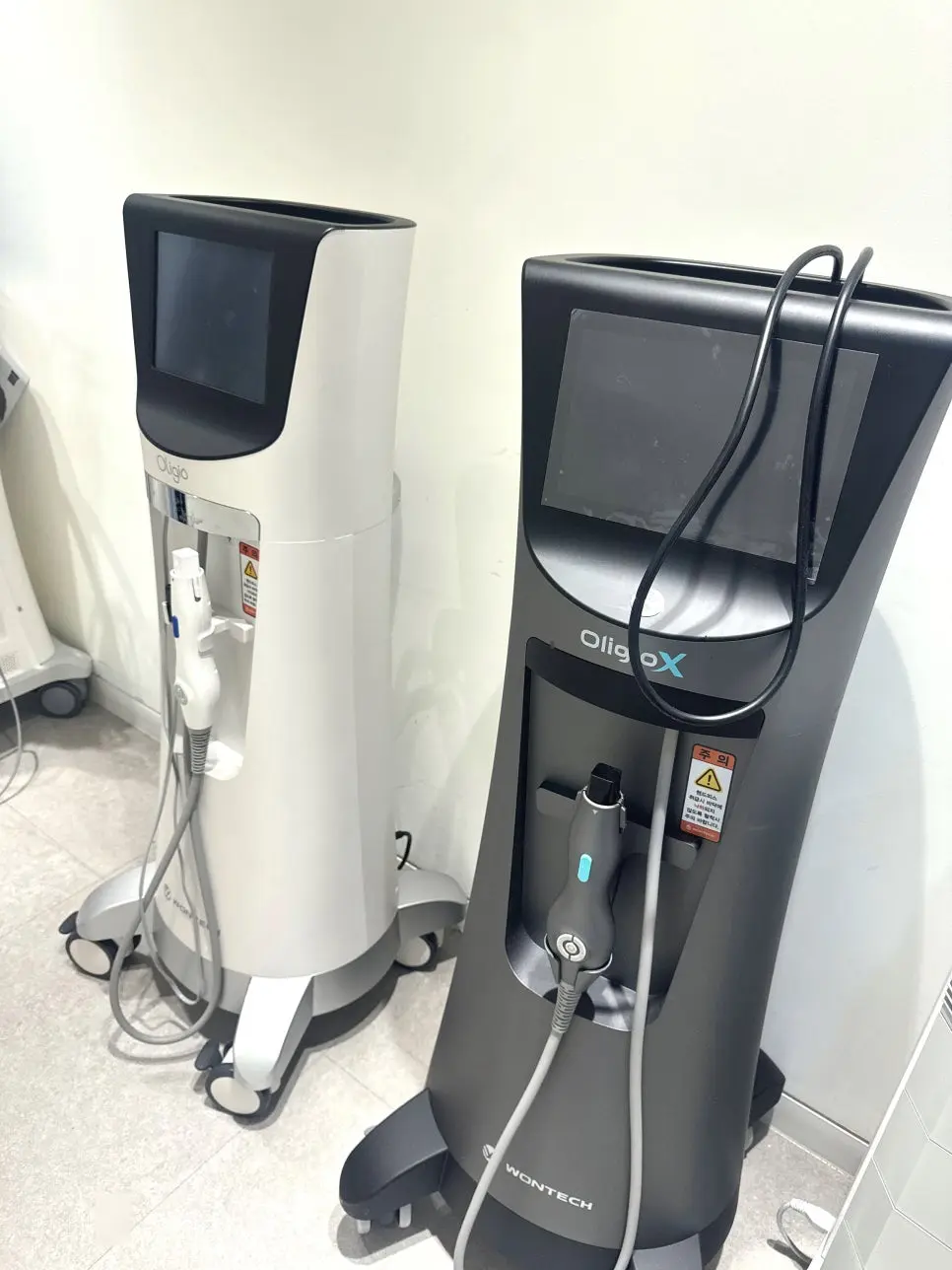
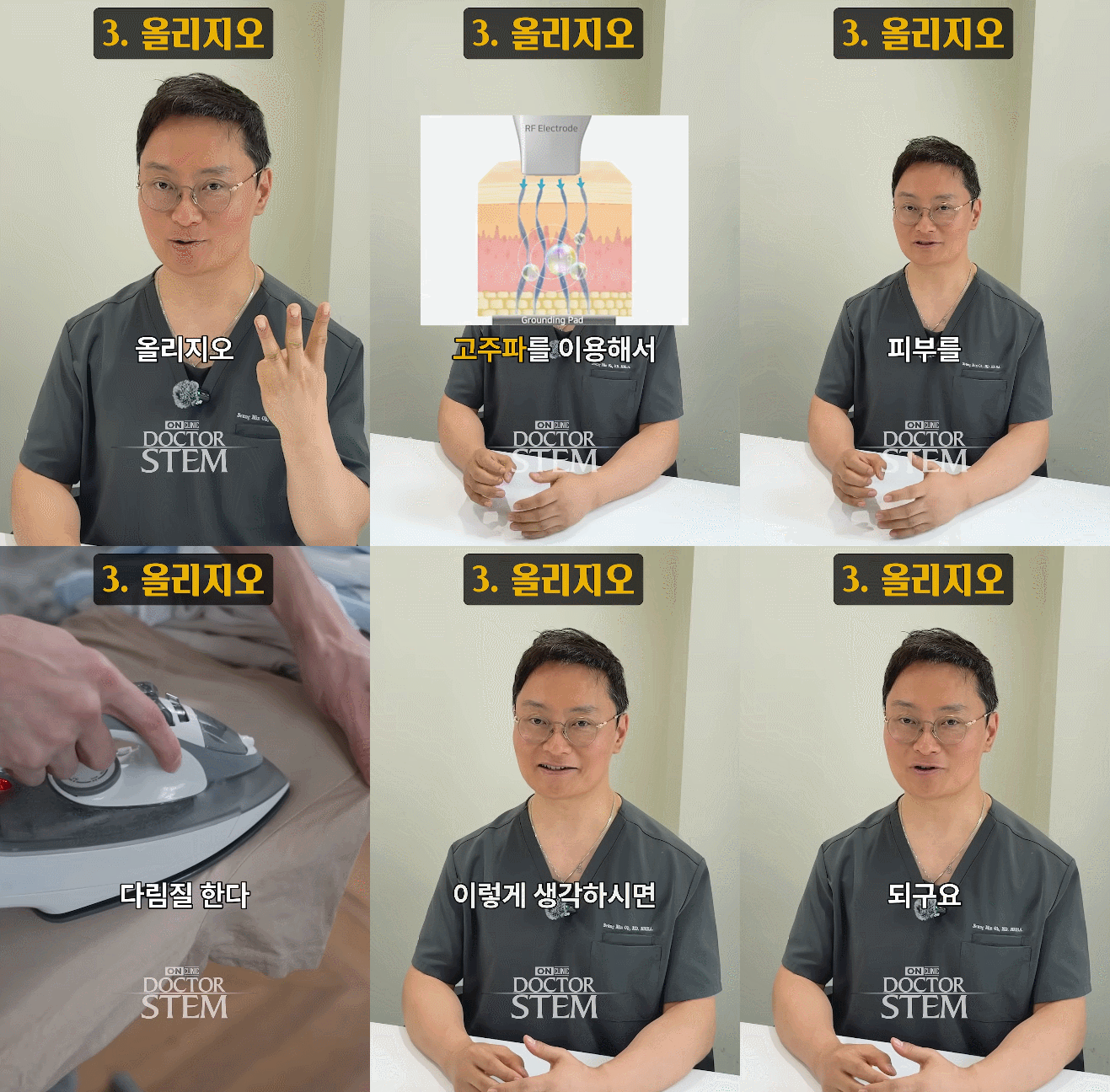
Oligio is a monopolar radiofrequency Lifting & Tightening device that stimulates collagen production by delivering thermal energy to the dermis layer.
Since the stimulation is delivered relatively uniformly, it is often recommended as one of the options for people in their 20s who are considering Lifting & Tightening for the first time.
The characteristics frequently highlighted when introducing Oligio to people in their 20s in the clinic are as follows:
- A method that induces collagen remodeling through thermal stimulation delivered to the dermis
- Monopolar radiofrequency characteristics where stimulation spreads relatively uniformly
- Relatively low burden for returning to daily life, making it possible to try even with a busy schedule
- However, the response and experience may vary depending on the individual's skin condition
Energy intensity is not simply set high.
The process of first checking whether it is appropriate thermal stimulation that can induce collagen remodeling, considering current skin thickness, skin texture, and pore condition, comes first.
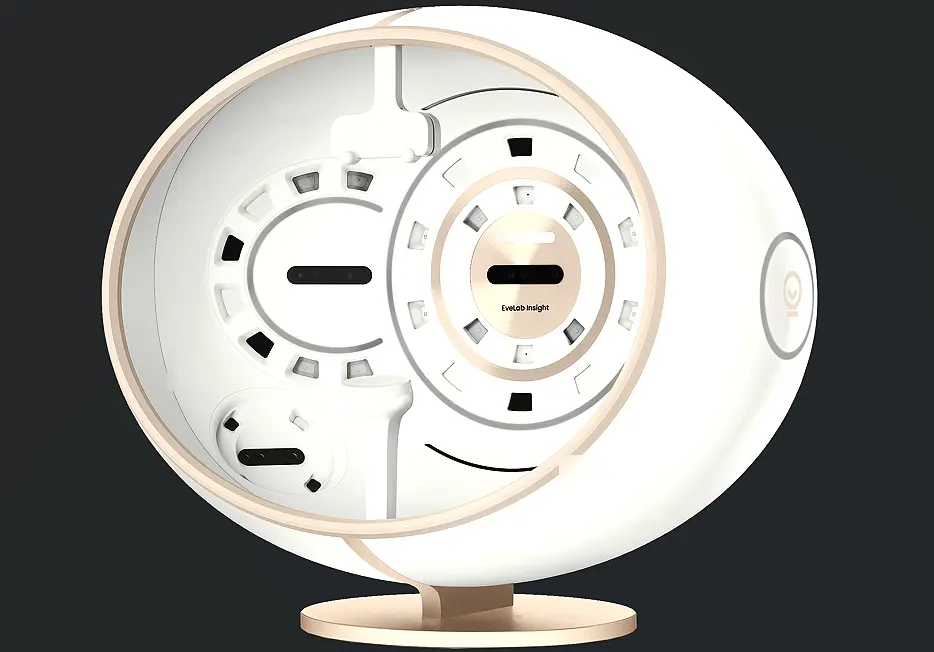
We recommend an approach that involves carefully examining the skin condition using an AI skin analysis device and then deciding on a personalized treatment plan.
People in their 20s often feel a significant burden from downtime.
Oligio is sometimes introduced as a first Lifting & Tightening, but the experience varies depending on the individual's skin condition and response.
Even within similar radiofrequency treatments, the approach differs for each device, and this is covered in detail in Why we recommend Oligio Kiss and Onda Lifting differently.
If you are curious about your skin, you can first get guidance by consulting via chat now.
There's something to look at before reviews and cost
When researching Oligio, rather than just using reviews or cost as criteria, it is better to check how much the clinic you plan to visit considers appropriate intensity and treatment design for skin in the 20s.
Even with the same equipment, satisfaction can vary depending on how the skin condition is analyzed and the treatment is designed.
The recommended order of checking in the clinic is as follows:
- Check if a preliminary consultation is available that meticulously examines skin thickness, skin texture, and pore condition.
- Observe whether appropriate energy intensity and direction are set for your skin through sufficient consultation.
- Receive advance information about potential swelling, redness, pain, and temporary heat sensation that may occur after the procedure.
(※ The applicability and intensity of the procedure must be determined through consultation with medical staff.)
The perspective of prioritizing intensity design over equipment specifications is also consistent with Why Thermage FLX shot count is not judged by numbers alone.
How should we understand post-procedure reactions and individual differences?
The effects and recovery process may vary depending on the individual's skin condition, skin thickness, and treatment design.
Immediately after the procedure, temporary heat sensation, swelling, or redness may appear, and most tend to subside over time, but the degree varies from person to person.
Skin improvement through collagen production stimulation often appears gradually over a certain period after the procedure.
It is more appropriate to approach it from the perspective of consistent management rather than expecting immediate changes.
Skin care in your 20s is more helpful when viewed as a long-term commitment rather than short-term. The treatment cycle, frequency, and complementary management methods vary depending on your skin condition, so we recommend accurately understanding your skin and discussing it thoroughly with medical staff before making a decision.
If you also have concerns about pores, a combination treatment may be considered rather than a standalone procedure. This judgment is further explained in Why we recommend a combination of Retigen and Oligio X for pores.
Frequently Asked Questions
Is it too early to get Oligio Lifting & Tightening in my 20s?
Collagen is known to gradually decrease from the mid-to-late 20s.
Oligio is often approached for the purpose of prevention and maintenance of healthy skin elasticity rather than correcting already sagging elasticity, making it one of the options to consider in your 20s.
However, the suitability of the procedure varies depending on individual skin conditions, so please decide after a preliminary consultation.
How long does it take to return to daily life after an Oligio procedure?
Oligio is known to have a relatively low downtime burden, but temporary swelling, redness, and heat sensation may appear after the procedure, and the recovery process varies depending on the individual's skin condition.
Please confirm the specific return-to-daily-life timeline with medical staff before the procedure.
How is the energy intensity determined during an Oligio procedure?
Energy intensity is not simply set high; it is important to set it at an appropriate level that can induce collagen remodeling after comprehensively analyzing the individual's skin condition, including skin thickness, skin texture, and pore condition.
It is determined through preliminary analysis using an AI skin analysis device and consultation with medical staff.
How is the Oligio procedure for people in their 20s approached differently from those in their 30s and 40s?
While procedures for people in their 30s and 40s focus on strongly lifting sagging elasticity, procedures for people in their 20s often consider pores, skin texture, and subtle loss of elasticity, designing the treatment to naturally induce collagen production at an appropriate intensity that matches the skin condition.
An individualized approach tailored to age group and skin condition is necessary.
When do the effects of the Oligio procedure appear?
Oligio is a procedure that gradually improves skin through collagen production stimulation, so rather than immediate changes, effects may appear after a certain period following the procedure.
The degree and timing of the effects vary depending on the individual's skin condition, and detailed information should be confirmed through consultation with medical staff.
If you are considering starting a procedure, you can consult via chat about your current skin condition first.
Recovery and Downtime: Oligio Procedure Recovery Patterns
Oligio uses monopolar radiofrequency to deliver heat to the dermis, so it is performed without incision or injection, and is known to have a relatively low downtime burden.
Immediately after the procedure, temporary swelling, redness, and a tingling heat sensation may appear, but they generally subside within a few days, and the recovery pattern and required period vary depending on the individual's skin condition and the set energy intensity.
We recommend confirming the criteria for returning to daily life, such as washing your face or applying makeup, with medical staff before the procedure.
How is the cost structured?
It is difficult to determine the cost of Oligio as a single amount.
The composition varies depending on the scope of preliminary analysis, such as AI skin analysis, the treated area and size, the number of shots delivered and energy settings, and whether post-procedure soothing care is included.
Even for people in their 20s, the guidance may vary depending on the appropriate intensity design for prevention and maintenance purposes, so for accurate costs, it is best to confirm your skin condition and then receive guidance through consultation.
Visit and Consultation Information
O.N Clinic is located in Sinnonhyeon, Gangnam, Seoul, making it easily accessible from the Gangnam Station area.
You can receive guidance on whether the procedure is right for you and what intensity is appropriate by visiting for a consultation and having your skin condition checked.
You can conveniently make reservations and preliminary inquiries via chat consultation.
Author: Dr. Oh Seung-Min (Chief Director of O.N Clinic, graduated from Seoul National University College of Medicine, Academic Committee Chairman of the Korean Laser Dermatology and Hair Society). For more details on his background, please refer to Medical Staff Introduction. First published: 2026-06-13 / Last reviewed: 2026-08-15
This article is for general information purposes only, and appropriate treatment and results may vary depending on individual conditions.