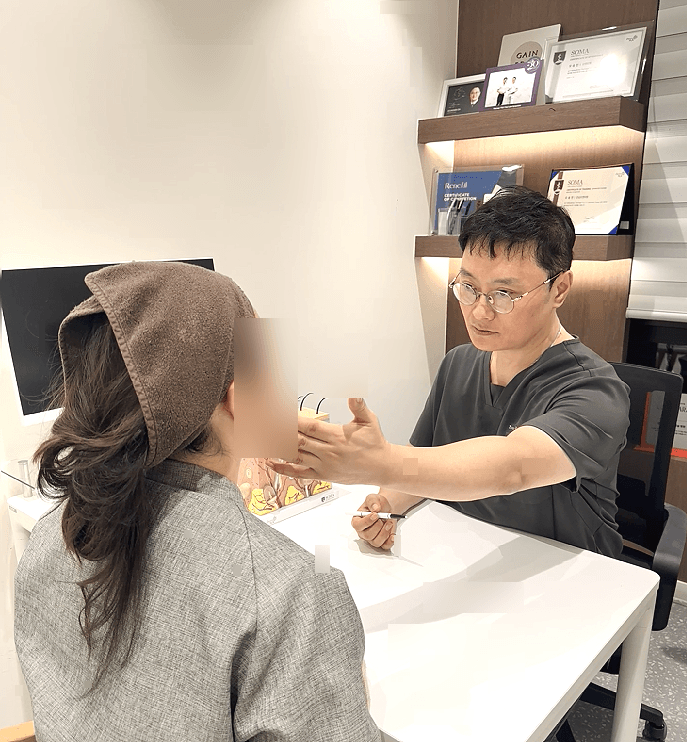
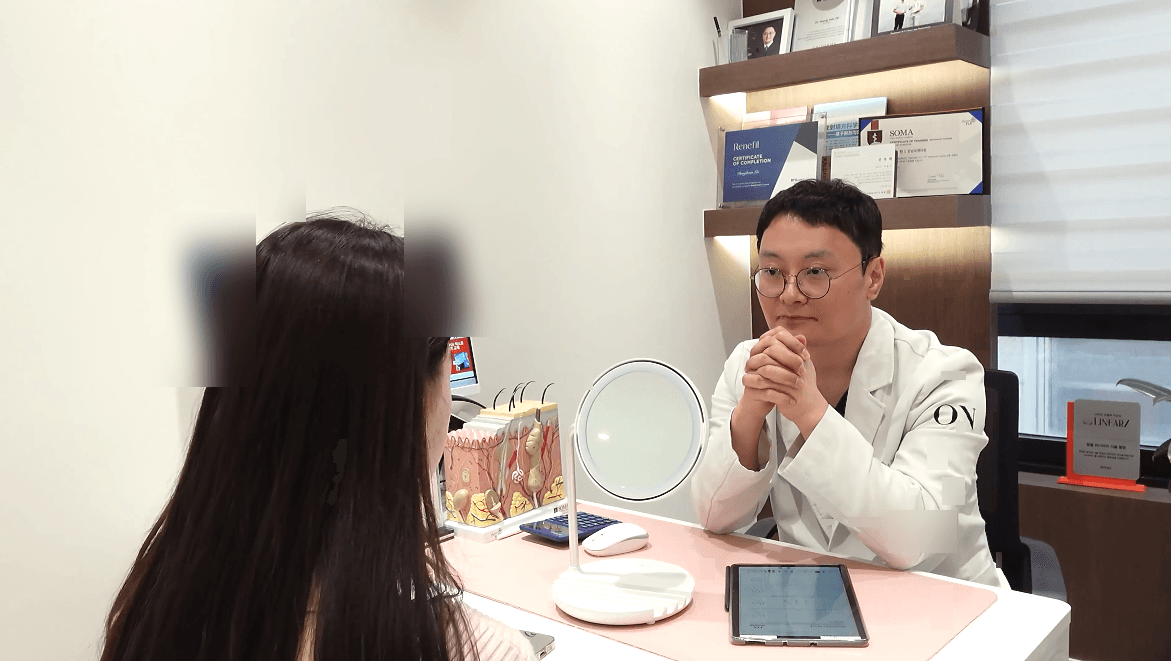
"It's been a month, can I get it again?"
This is the most frequently asked question during Oligio consultations.
Many people become impatient because they don't feel a significant change immediately after the procedure.
However, this procedure is designed to show changes slowly.
Please take just one minute to read this.
This procedure waits for regeneration, not just stimulation.
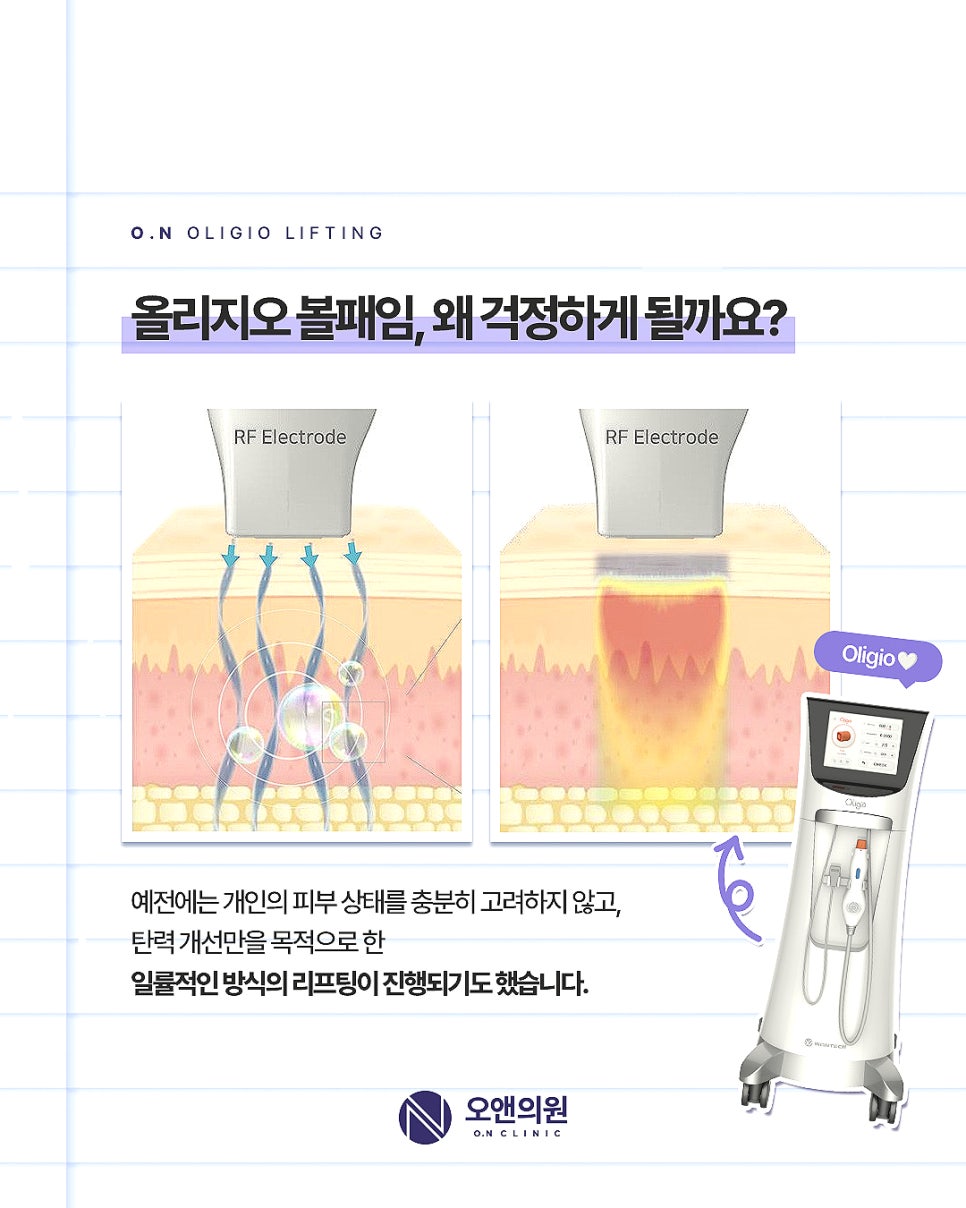
Oligio uses high-frequency thermal energy to provide subtle stimulation to the skin, inducing our body to naturally produce collagen again.
The key here is that the skin itself, not the equipment, is the primary agent creating the results.
The equipment's role is limited to providing the signal; what follows is a regeneration process that spans several weeks to several months.
Therefore, not feeling significant changes immediately after the procedure is not a sign of failure.
It is closer to meaning that the process is still ongoing.
If you stimulate again during regeneration
Understanding this principle clarifies why we do not recommend receiving the treatment again after just one month.
| Timing | What happens in the skin | If treated again at this time |
|---|---|---|
| Immediately after treatment | Recovery response to thermal stimulation | Recovery burden may overlap |
| Several weeks later | Collagen production is ongoing | May interfere with ongoing regeneration |
| After the appropriate cycle | Regeneration is largely complete | It becomes the time to build the next layer |
If heat is applied again to skin that is still in the process of filling, it may not add to the effect but rather create an overlapping burden.
It's similar to sowing seeds in a field and then plowing it again before the sprouts emerge.
Oligio is a procedure that requires time for the skin to regenerate itself.
(※ Effects and responses may vary depending on individual skin condition, and suitability for the procedure is determined through consultation with medical staff.)

The truth about the "hollow cheeks" story
Many people come in having heard stories that "Oligio causes hollow cheeks."
There are two factors contributing to this concern.
One is intensity. If the output is too high without considering skin thickness and fat volume, the burden may outweigh the elasticity improvement.
The other is the original volume status. If the side cheeks are already hollow and only elasticity is improved, the hollow areas may become more prominent as sagging is tightened.
In this case, it's not that the procedure caused the hollowing, but rather that pre-existing hollowing became more apparent.
Therefore, during consultation, sagging and volume loss are assessed separately, and if necessary, filling procedures may be designed in conjunction.

How the cycle is determined
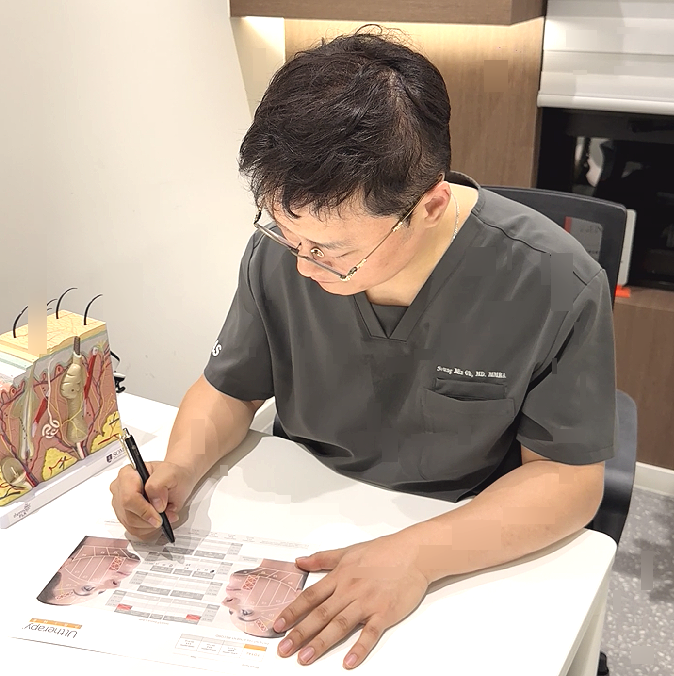
Rather than mechanically applying a fixed number of months, we determine it based on the following:
- How far the elasticity changes have progressed since the last procedure
- The thickness of the skin and the amount of fat
- Whether the area to be treated this time is the same or different from last time
- Whether other procedures were performed concurrently
Even for the same person, the cycle may vary depending on the area.
Ultimately, the standard is not the calendar, but what stage my skin is currently in.

Frequently Asked Questions
Can I receive Oligio once a month?
We do not recommend it. If stimulation is applied again while collagen regeneration is in progress, it may put a burden on recovery.
Does Oligio cause hollow cheeks?
Rather than the procedure causing hollowing, there are cases where the intensity does not match the skin condition, or pre-existing volume loss becomes apparent after sagging is tightened. It is necessary to assess sagging and hollowing separately during consultation.
Is it wrong if there is no change immediately after the procedure?
Since collagen is newly produced and appears gradually, significant changes may not be noticeable immediately after the procedure. It is more accurate to observe the progress on a monthly rather than weekly basis.
What are the criteria for determining the cycle?
We consider the elasticity changes since the last procedure, skin thickness and fat volume, the area to be treated this time, and whether concurrent procedures were performed. A fixed number of months is not applied uniformly.
Can there be side effects after the procedure?
Temporary redness, swelling, and heat sensation may occur. The degree and duration vary by individual.
Recovery and Downtime: Progress of Thermal Energy Procedures
On the day of the procedure, redness and a sensation of heat may remain, usually subsiding within one to two days.
During this period, it is advisable to avoid activities that add heat and stimulation, such as saunas or strong massages.
Elasticity changes appear gradually over several weeks, so comparing photos taken immediately after the procedure with those taken a month later can show the progression.
How is the cost structured?
The cost is not determined by the number of shots alone.
It varies depending on whether it's the entire face or a partial area, how many target areas there are, and how the shots are distributed.
Pre-diagnosis and inclusion of post-procedure care also affect the cost.
Even with the same number of shots, the composition can vary depending on the design, so it is more accurate to provide the exact cost after a consultation to assess your skin condition.
Visit and Consultation Information
O.N Clinic is conveniently located near Gangnam Station, making it easily accessible by subway.
Before your visit, you can comfortably inquire about any questions you have via Chat Now, and through consultation, you can adjust the timing and intensity of your next procedure, as well as your appointment schedule.
It is more accurate to determine the cycle and intensity after assessing your skin condition during an in-person consultation.
Written by: Dr. Oh Seung-min (Chief Director, O.N Clinic, graduated from Seoul National University College of Medicine, Academic Committee Chairman of the Korean Society for Laser Dermatology and Hair). For detailed credentials, please refer to Medical Staff Introduction. First Published 2026-08-13 / Last Reviewed 2026-08-15
This article is for general informational purposes only, and appropriate treatment and results may vary depending on individual conditions.