
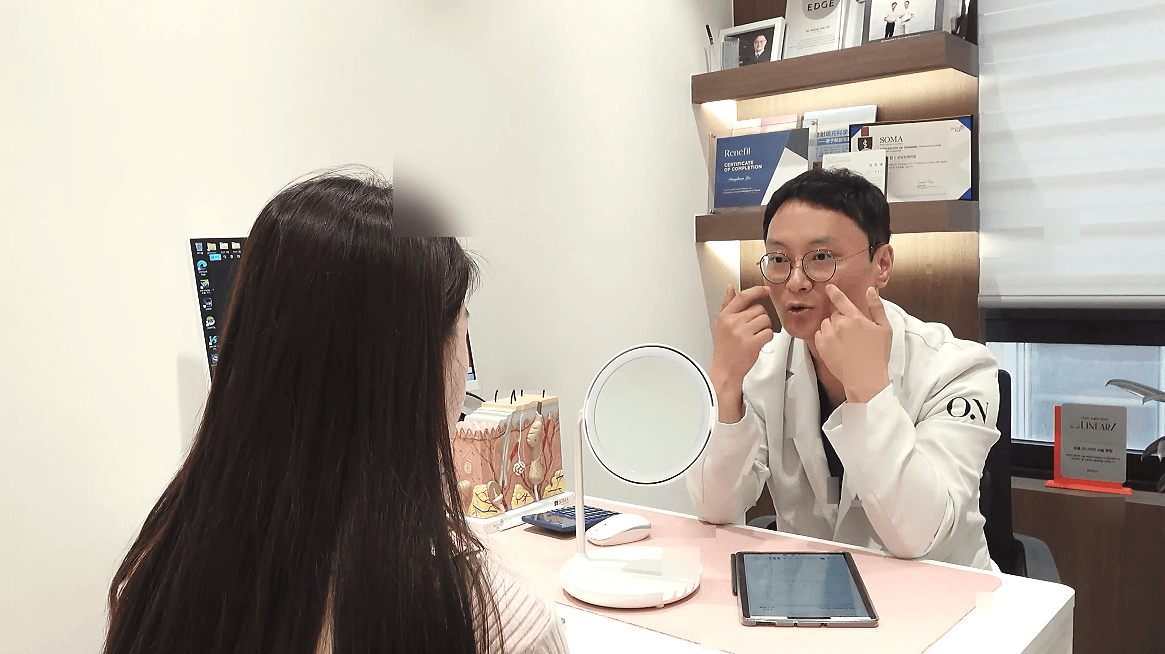
Key summary: The so-called Ozempic face, in which the face looks gaunt after weight loss with Wegovy or Mounjaro, is often seen as more closely related to the speed of weight loss than to the drug itself. The temples and side cheeks hollow first while the cheekbone and jaw contours remain, creating a peanut-shaped face, and because these areas move constantly when chewing and smiling, we consider connecting the hollow borders with Teoxane filler that follows movement once weight has stabilized.
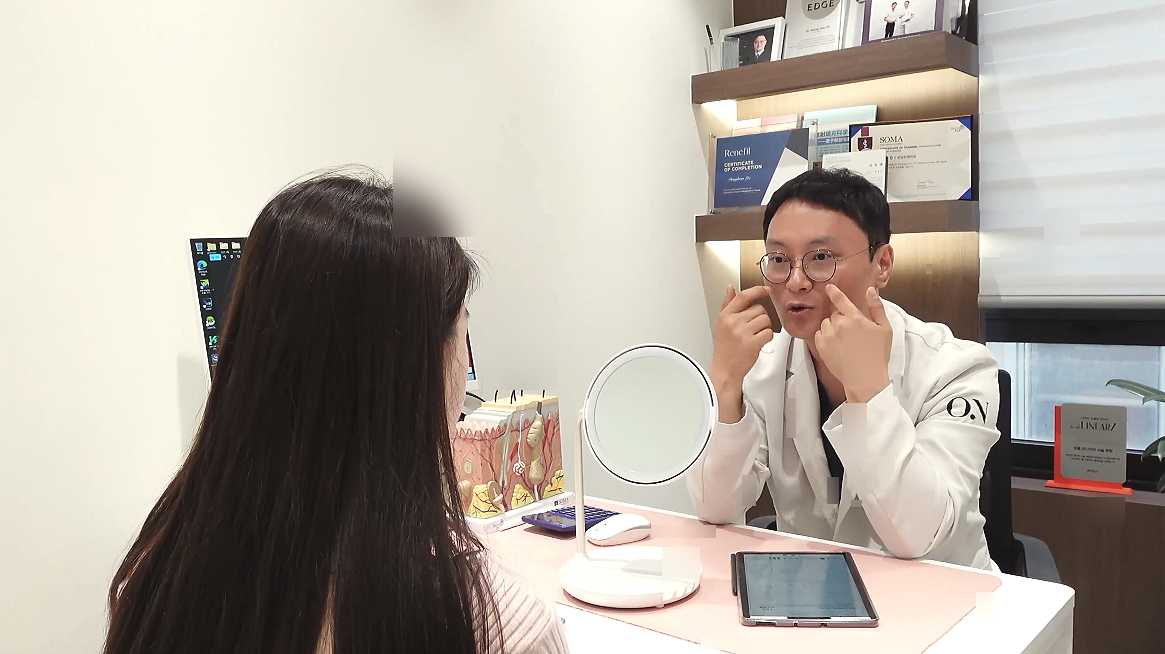
When the body is lighter but the face looks older
These days I often hear in the clinic that the number on the scale has clearly gone down, yet the face in the mirror looks older. People who succeeded in losing weight with Wegovy or Mounjaro say their face became gaunt, or that their temples sank while only their cheekbones stuck out, leaving a peanut-shaped face.
It is natural to feel frustrated when the body is lighter but the face seems to have lost its vitality. This article explains why the change commonly called Ozempic face happens, the structure that creates a peanut-shaped face, and why I choose Teoxane filler for this concern.
Ozempic face, a matter of weight loss speed more than the drug
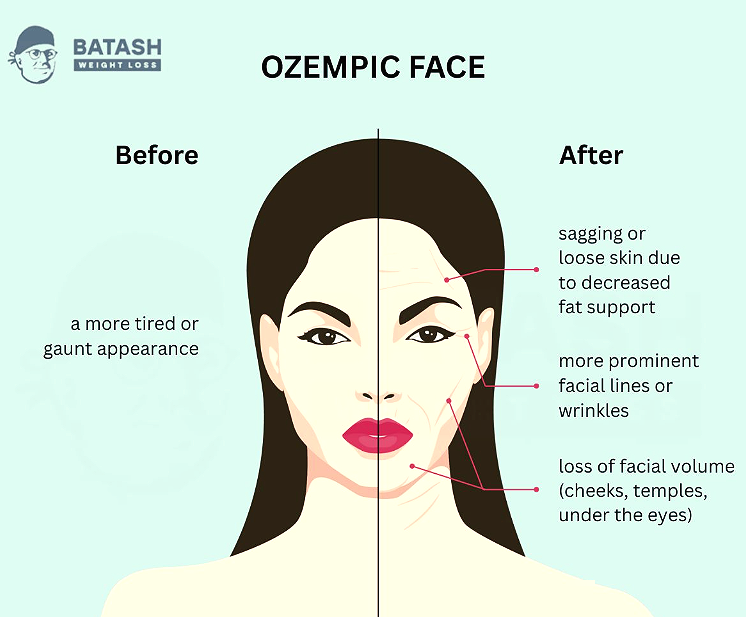
Ozempic face refers to the face looking hollow and saggy after losing weight with GLP-1 obesity medications. Because of the name, many people think the drug ages the face, but recently many see rapid weight loss, rather than the drug itself, as the main cause.
In fact, similar changes are known to occur when weight drops significantly even through dieting without medication. Still, because Wegovy and Mounjaro reduce weight a lot in a short time, it is true that these changes are especially noticeable.
Facial fat is small in volume compared to the body, so even a slight decrease shows clearly. If the skin cannot keep up with the reduced volume, hollowing and sagging appear together, and since the skin's ability to contract again weakens with age, the same weight loss tends to be more noticeable in people in their 40s and 50s than in their 30s.
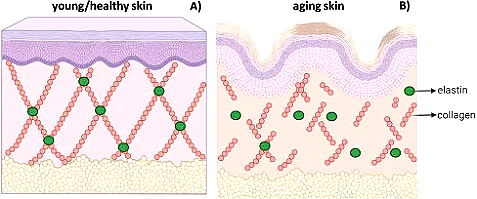
That is why I tend to explain Ozempic face not as a side effect of GLP-1 drugs but as a problem arising from the speed of weight loss.
The structure that creates a peanut-shaped face
The face becomes peanut-shaped instead of shrinking evenly because the areas that lose volume and the areas that remain are different. The temples and the side cheeks below the cheekbones were filled by relatively thin fat layers, so they tend to sink first when weight is lost through dieting.
In contrast, the contours of the cheekbones and jawbone are bone structures and remain. The more weight is lost, the more the bones stand out, and as hollow areas sink further and protruding areas stand out relatively more, a peanut silhouette narrow at the top and bottom forms.
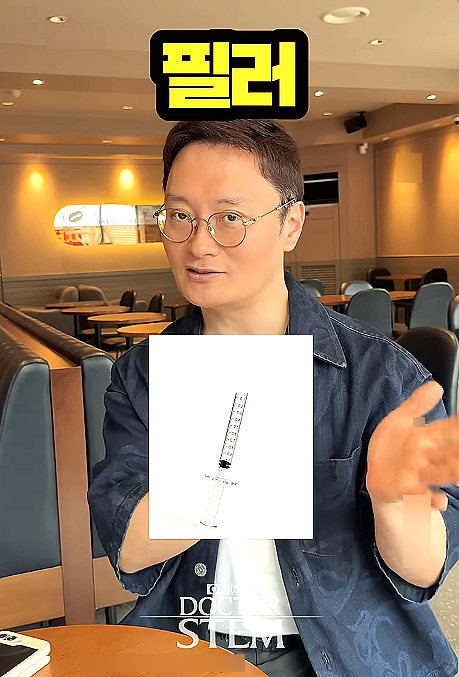
Is filling enough? The trap of moving areas
Most people think of filler first when they see a peanut-shaped face, but there is one trap here. It may seem enough to fill the hollow areas, but the temples and side cheeks move constantly whenever you chew, smile or talk.
Beneath the temples lies a muscle used for chewing, and the side cheeks repeatedly contract and relax with every smile. If filler is placed based only on the face at rest, that area alone may look lumpy the moment you smile.
So for the temples and side cheeks, what kind of filler material is used matters as much as how much is filled.

Two things to check before filler
First, if you are still dieting, I recommend not rushing. As weight keeps dropping, the shape of the face keeps changing, so even if the shape is set with filler now it may not fit a few months later, and I recommend starting after weight has stabilized to some extent.
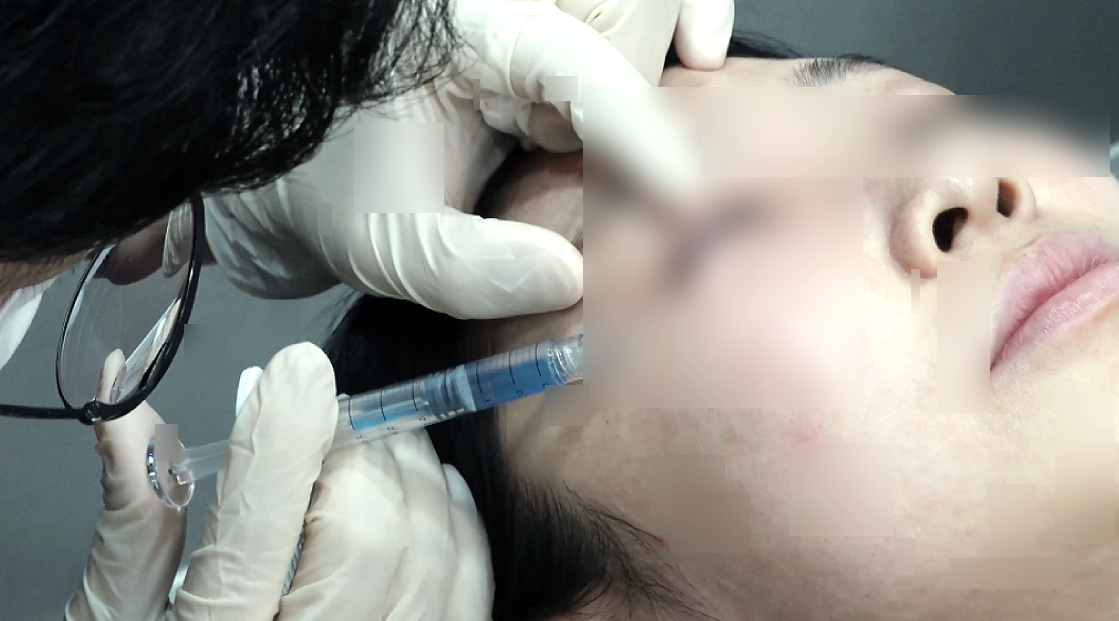
Next is wanting to fill a lot compared to the degree of hollowing. Injecting a large amount at once only turns a peanut-shaped face into a round one and rarely creates natural curves. The goal of improving a peanut-shaped face is not to enlarge the face but to smoothly connect the border between hollow and protruding areas.
Why I choose Teoxane filler, and the treatment order
Teoxane filler is a hyaluronic acid (HA) filler made in Switzerland, and its RHA line is known to be designed to stretch and return with facial movement. This property suits the temples and side cheeks, which move whenever you chew and smile.
Another advantage of Teoxane filler is that each line differs slightly in firmness and flexibility, so it can be chosen by area, such as the temples and side cheeks. Also, as an HA filler, it can be adjusted with a dissolving enzyme when needed, which is reassuring for people whose faces may continue to change a little after dieting.
Before treatment, we look at the face from the front, from the side and while smiling, check the location of temple blood vessels and the layer where fat was lost, and then decide the amount and depth. Rather than finishing at once, we first connect the hollow borders, check how it settles after shaping, and then add only as much as needed.
Asking during the consultation how long after weight loss it is fine to start filler is also very helpful.

Only when the face looks as light and lively as the body feels can you feel the diet is truly complete. Rather than filling in a hurry, I recommend filling after the face has settled, taking movement into account as well.
Frequently asked questions
My temples sank after dieting. Will they come back if I regain weight?
Some volume may return as weight increases, but it is hard to guarantee that facial fat will return evenly to its original place. It is good to check your future weight plan and the current degree of hollowing together before deciding the direction.
I am still losing weight. Can I get filler now?
If weight is still dropping, the shape of the face changes too, and the volume placed may later look awkward. Starting after weight has stabilized to some extent can help achieve a natural result.
Won't filling hollow cheeks make my face look bigger?
Injecting more than the degree of hollowing or in the wrong position can make the face look wider. Designing the amount and position to the level of naturally connecting the hollow borders can reduce this concern.
Visiting and consultation
O.N Clinic is located near Gangnam Station, so it is easy to reach by subway.
If a peanut-shaped face after Wegovy or Mounjaro weight loss concerns you, noting when you started losing weight, whether your weight has stabilized, and which area looks most hollow makes the Teoxane filler design consultation easier. If you have any questions, feel free to ask via Chat with us now.
Written by Dr. Oh Seung-min (Chief Director of O.N Clinic, graduate of Seoul National University College of Medicine, Academic Committee Chair of the Korean Society for Laser, Skin and Hair). His full background is available on the Medical Team page. First published 2026-10-16, last reviewed 2026-11-10
This article is for general information only. Suitable treatment and results may vary depending on each person's condition.