

Key summary: HIFU and RF in Oligio XM are not competing over which is stronger. They are two methods that differ in how deep the energy reaches and how it spreads. Faces that have started to sag from the deeper support layer tend to suit HIFU, faces where skin elasticity and texture weakened first tend to suit RF, and when both concerns overlap we divide the methods by area.

Why Oligio XM reviews are so mixed
When you research Oligio XM, you will find many posts comparing whether HIFU or RF is stronger and more effective. But the strength of the output and how well it fits your face are separate questions, so choosing on strength alone often leads you in the wrong direction.
Even with the same Oligio XM, some faces suit the HIFU method and others suit the RF method. Choosing the opposite one without this distinction can leave only a small change and an awkward look, and we believe this mismatch is one reason lifting reviews split so sharply between satisfaction and disappointment.
This article keeps the theory short and explains, by face type, which method to consider first and how to divide them when both apply.
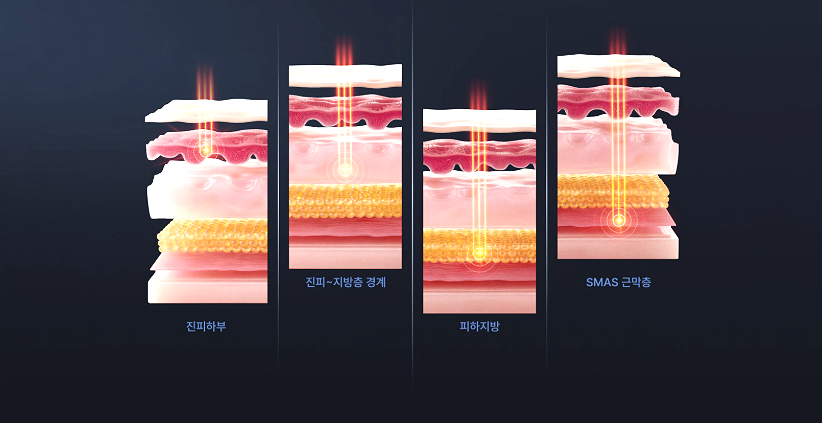
HIFU, for faces sagging from the deep support layer
HIFU gathers ultrasound into a single point to create heat spots deep inside the skin. It is known to work closer to lifting the structure that supports the face, so we consider it first for faces that have begun to collapse from within rather than on the surface.
A typical case is a blurred jawline. If the line under the chin looks smudged from the side, or the skin seems to droop below the jawline when you lower your head slightly, we consider HIFU first.
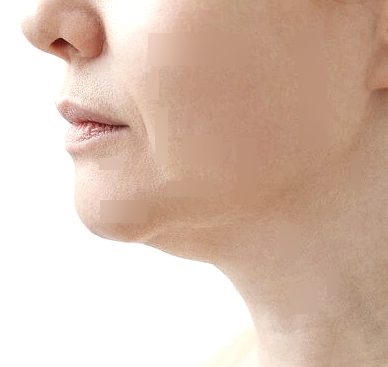
A face with shadows beside and below the corners of the mouth also leans toward HIFU. When weight in the lower face makes the mouth area look droopy, the cause has likely started in the support layer beneath the skin, and treatments that address only the surface may show little change, so a method that delivers energy to the deeper layer is often needed.
Faces with some cheek fat and skin thickness also tend to suit HIFU. Because the heat gathers deep, having volume to support it reduces the worry about hollowing, which is also why people who feel their sagging is heavy because of facial fat often report high satisfaction with HIFU.
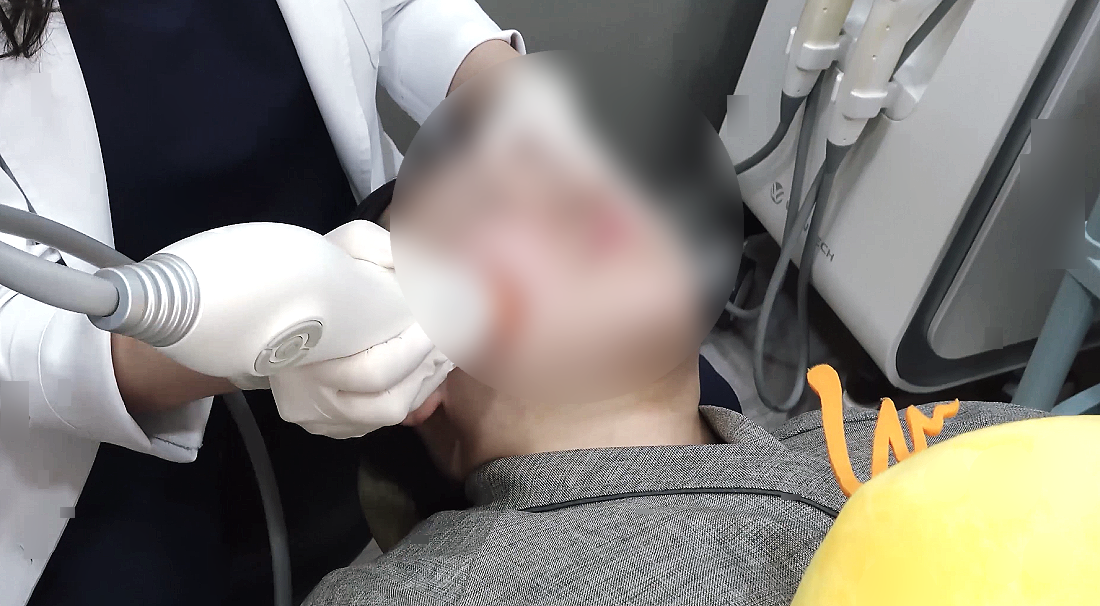
A HIFU self-check and faces that need caution
In front of a mirror, gently lift the skin in front of your ears upward with both hands. If your impression changes noticeably, sagging of the deep support layer may be at the center of your concern.
On the other hand, for a face with little cheek fat and thin skin, I do not use HIFU at strong energy. Trying to improve sagging could instead make the cheeks look hollow.
Many people assume that the deeper lifting goes, the better, but depth is less about superiority and more about direction. A face whose deep layer has collapsed is treated deeply, and there is no reason to send deep heat to a face that does not need it.
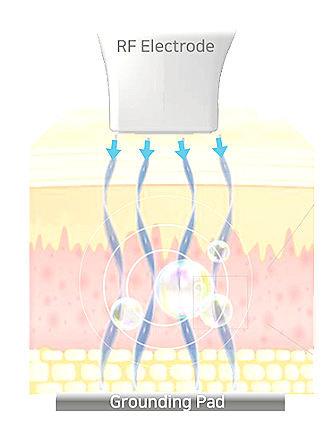
RF, for faces where elasticity and texture weakened first
RF warms the dermis broadly and evenly with radiofrequency energy. Unlike HIFU, which focuses on one point, it spreads heat across a surface and is known to work closer to refining overall skin elasticity and texture. So RF comes to mind first for faces where the skin itself has weakened rather than the contour having dropped.
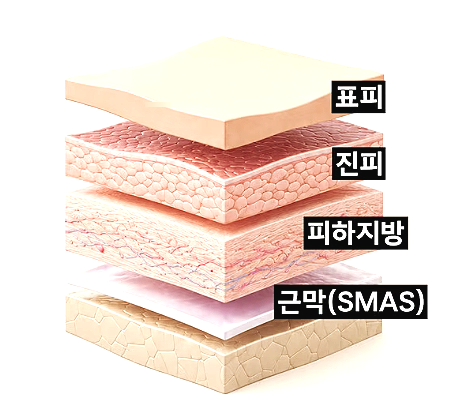
The first case is a face whose contour still holds but whose skin has become thinner and duller. If makeup no longer sits well and fine lines have increased, RF is worth considering. The second case is when thin areas such as around the eyes or the forehead are the concern.
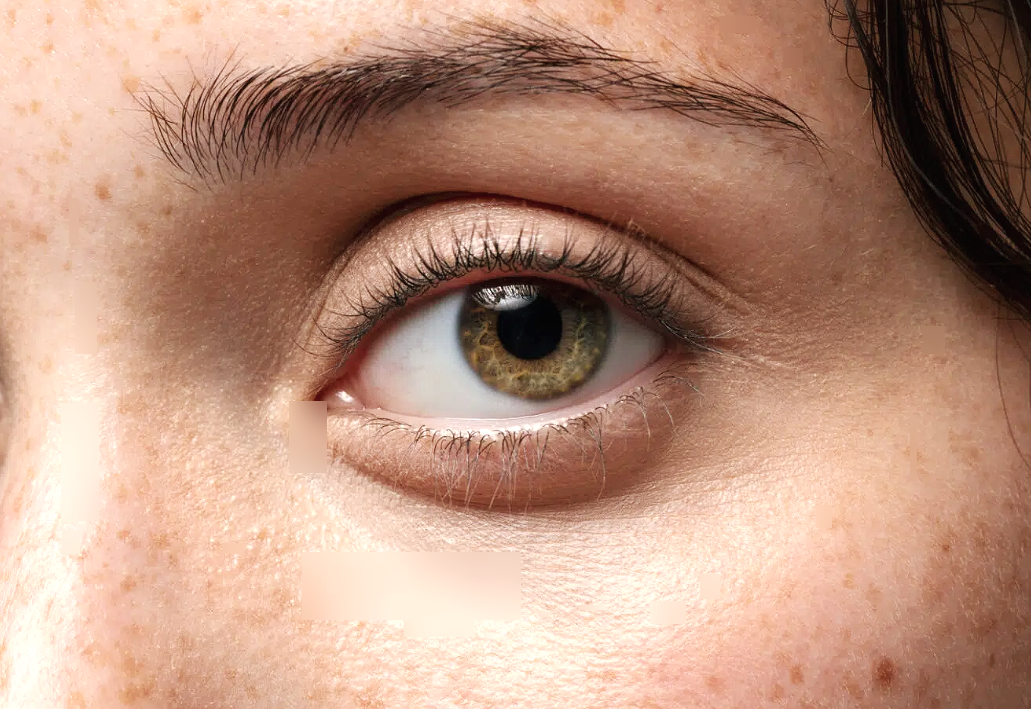
In thin areas, lifting shallowly and broadly often leads to a more natural result than tightening the deep layer. Forcing deep energy into these areas may leave discomfort before any expected effect.
The third case is a face with little cheek fat for which deep heat is a burden. This is exactly the face I described as needing caution with HIFU, and if you want firmer skin while leaving volume as it is, RF can be the safer option.

An RF self-check and surface protection in Oligio XM
Gently pinch your cheek skin with your fingers and let go. If it feels thin and returns slowly, skin elasticity itself may be the core concern.
Oligio XM monitors skin temperature and resistance in real time during treatment and repeats cooling, so it is known as a device that pays attention to surface protection even when spreading RF heat broadly over thin skin.
When a face fits both HIFU and RF
In actual practice, many faces meet the conditions for both HIFU and RF. In that case we do not insist on one method but divide them by area.

For example, areas that need strength, such as the jawline, receive a slightly larger share of HIFU, while areas that need refining, such as under the eyes and the front of the cheekbones, are smoothed with RF. Areas where volume should be protected, such as the front of the cheeks, receive lower intensity or are left untreated.
Having HIFU and RF together in one Oligio XM does not mean you can receive more. It is more accurate to see it as being able to choose the method that suits each area.

In short, HIFU for faces that collapsed from within, RF for faces whose skin base weakened, and distribution by area for faces with both. Rather than comparing device specifications, using the face you see in the mirror as the standard is the first step to making good use of Oligio XM.
Frequently asked questions
My jawline is fine, but my skin keeps feeling thinner
If skin elasticity is the main concern rather than the contour, RF, which firms the skin broadly, may suit you better than HIFU, which lifts the deep layer. We recommend checking the contour and the skin condition separately.
My cheeks are thin, and I worry ultrasound lifting will make them more hollow
Strong energy in the deep layer of a face with little volume can cause hollowing. In such cases we consider lowering HIFU intensity or planning around another method such as RF.
Doesn't lifting work better the deeper it goes?
Depth is less about the size of the effect and more about which layer is treated. HIFU may suit faces whose deep layer has collapsed, and RF may suit faces whose main concern is the skin itself.
Visiting and consultation
O.N Clinic is located near Gangnam Station, so it is easy to reach by subway.
If you are unsure whether HIFU or RF in Oligio XM suits you, try the ear lift check and the cheek pinch check once before your visit. Sharing how they felt makes the consultation on dividing methods by area much easier. If you have any questions, feel free to ask via Chat with us now.
Written by Dr. Oh Seung-min (Chief Director of O.N Clinic, graduate of Seoul National University College of Medicine, Academic Committee Chair of the Korean Society for Laser, Skin and Hair). His full background is available on the Medical Team page. First published 2026-11-06, last reviewed 2026-11-10
This article is for general information only. Suitable treatment and results may vary depending on each person's condition.