
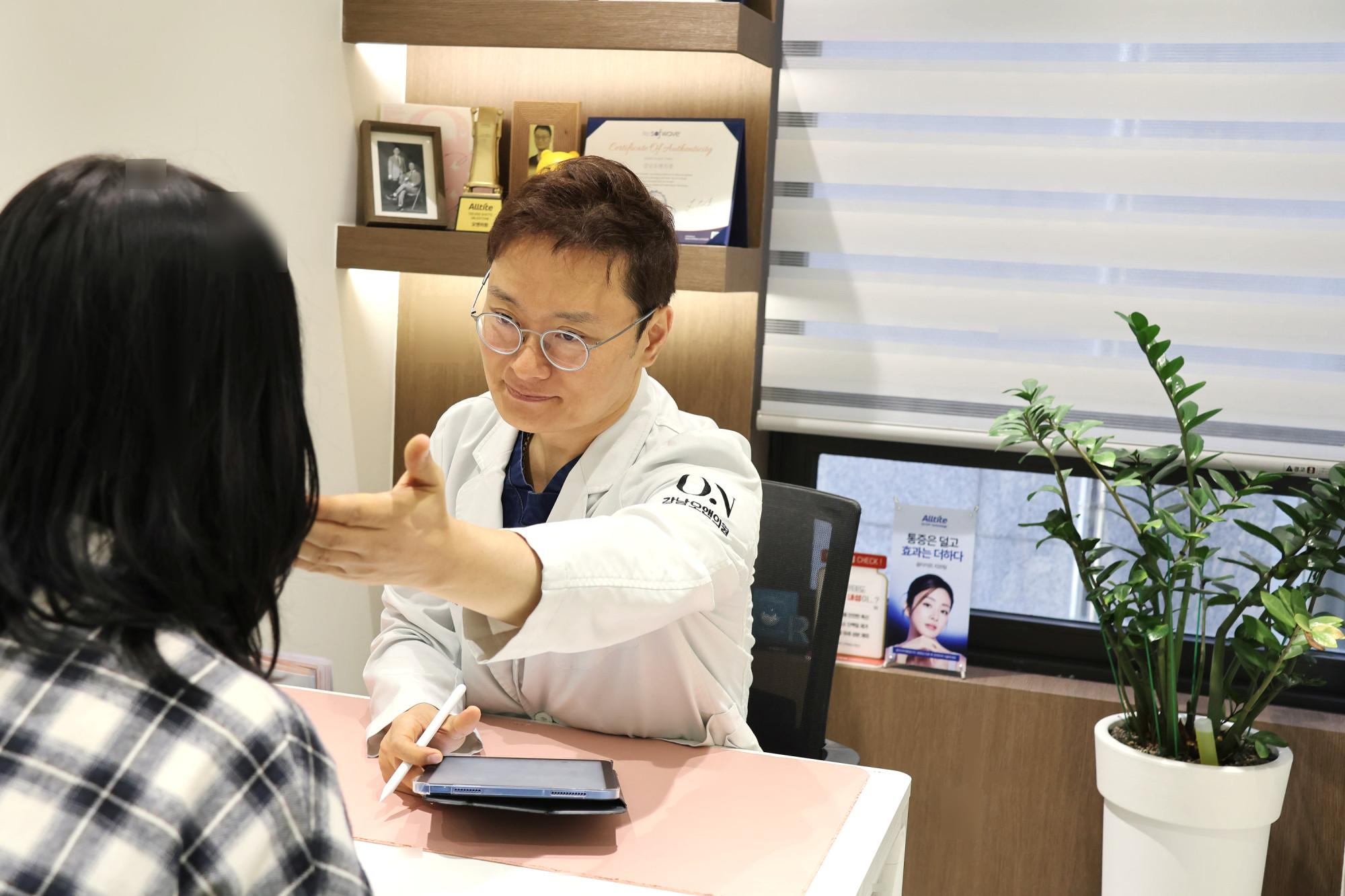
Key takeaways: Hollow cheeks often appear when reduced volume in the deep layer overlaps with lower density in the skin above it. The first reason for combining Juvelook Volume and Titanium lifting is that they divide the work, with Juvelook Volume filling volume from within and Titanium lifting firming skin density; the second is that the intensity and amount of each can be distributed differently by area.
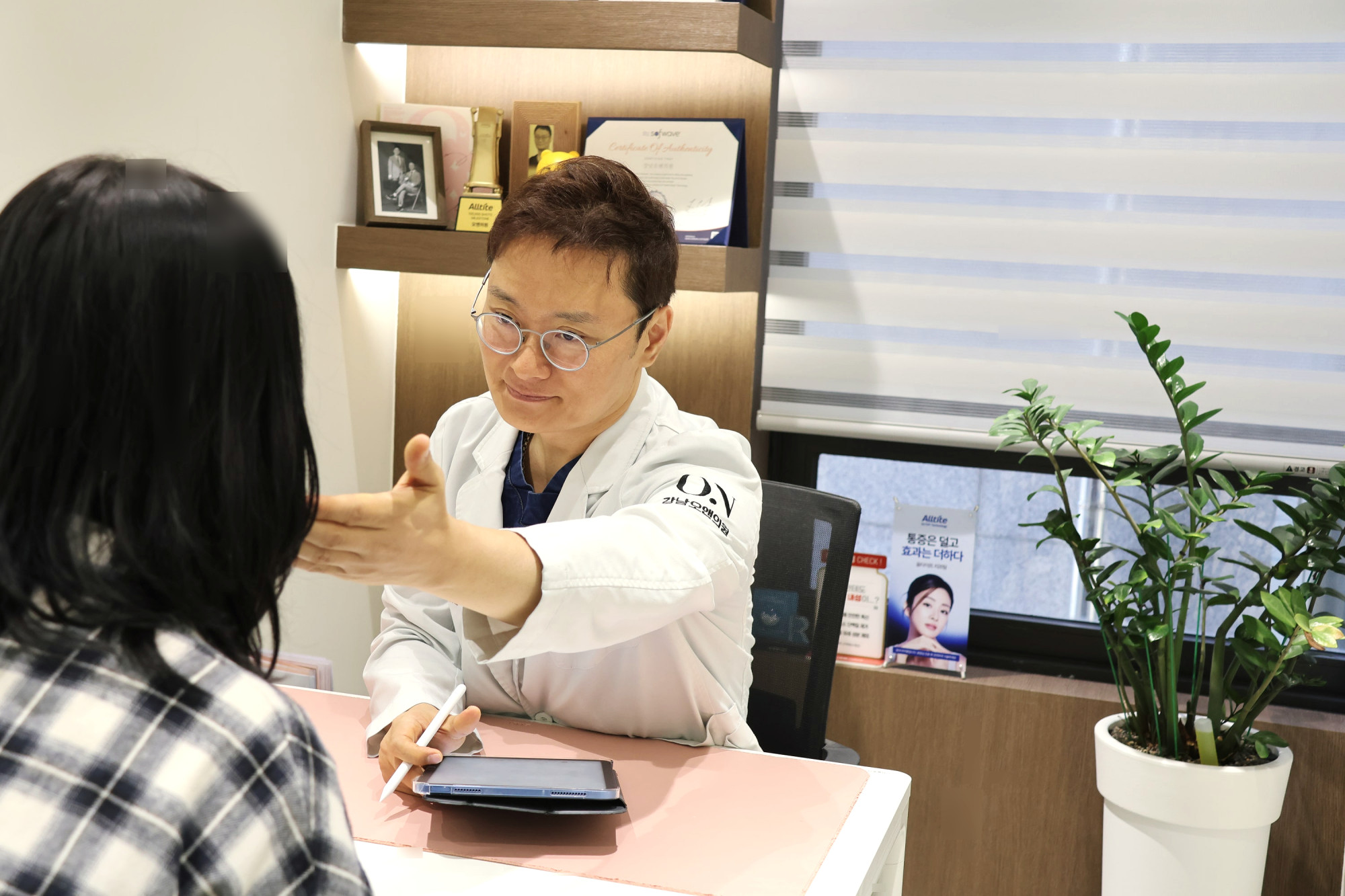
Why strong lifting should not come first for hollow cheeks
Some people with hollow cheeks want to start with high intensity lifting, but Dr. Oh Seung-min does not recommend that order. Delivering strong heat alone to cheeks that are already sunken can make the face look gaunter instead of lifted.
Filling volume alone does not finish the job either. Filling is only half of it, and the other half depends on the skin that covers that volume. This is where Dr. Oh's reason for discussing a combination of Juvelook Volume and Titanium lifting for hollow cheeks begins.
Hollow cheeks are a loss of both volume and skin density
Hollow cheeks are hard to see simply as the result of weight loss. Looking closely, two things have often weakened together: the volume of the deep layer that once supported the cheek has decreased, and the skin on the surface has thinned and loosened, lowering skin density.
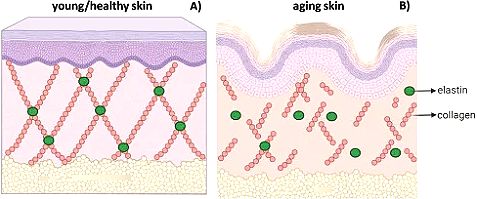
Skin density refers to how tightly collagen fills the dermis. When skin density is low, even a small loss of volume underneath lets the surface sink, making hollow cheeks more visible.
Reason one, Juvelook Volume fills and Titanium lifting firms
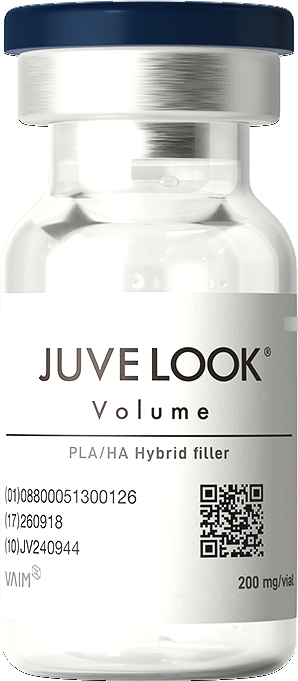
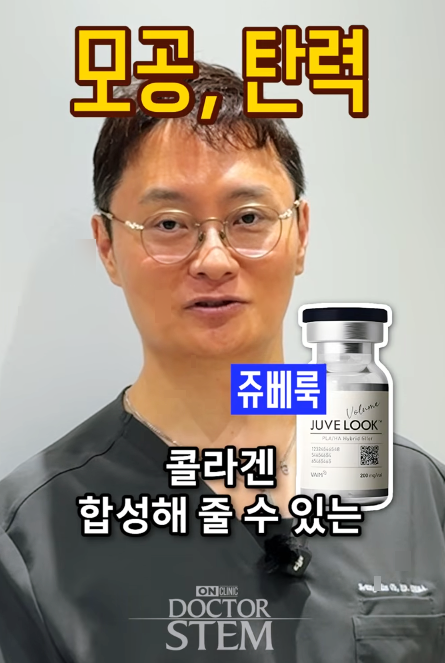
Juvelook Volume takes on the role of filling volume. Its main components are PDLLA and hyaluronic acid, and because its PDLLA particles are slightly larger than those of standard Juvelook, it is introduced as a collagen booster placed toward deeper tissue layers.
It is not a structure that completes the shape the moment it is injected; volume rises slowly while the body produces new collagen. If filler builds shape all at once, Juvelook Volume is often described as closer to a change that feels like your own tissue returning.
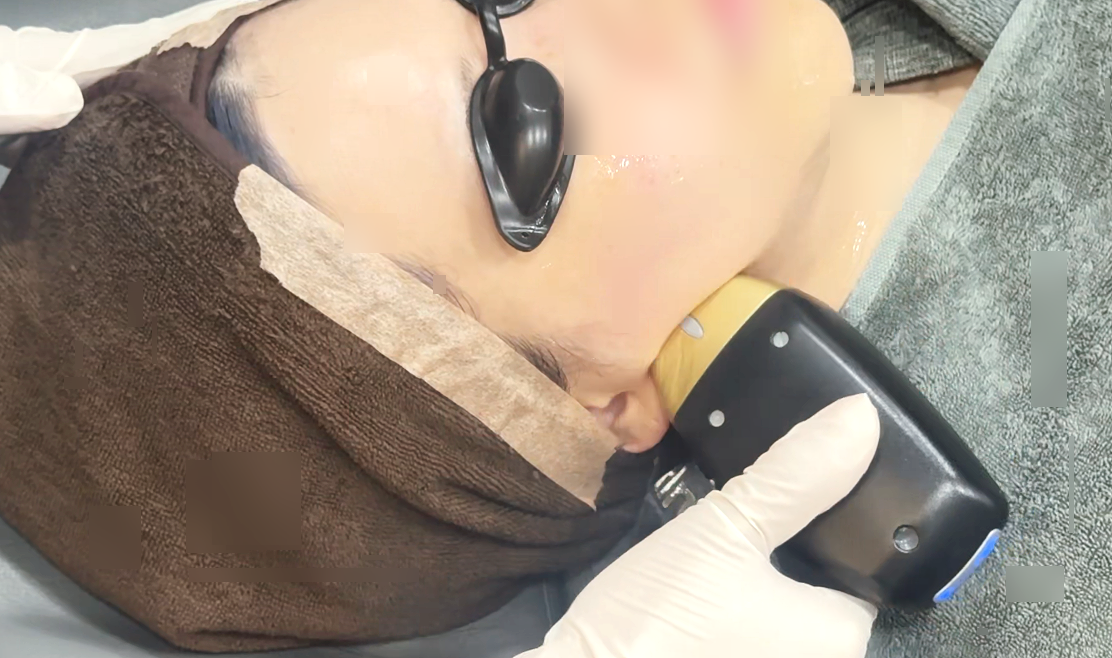
Titanium lifting takes charge of skin density. Three wavelengths of 755nm, 810nm and 1064nm come from a diode laser together and deliver heat from the dermis down to the deeper supporting structures, and that heat tightens loosened skin and firms skin density.
In short, Juvelook Volume handles volume deep down and Titanium lifting handles skin density near the surface, so their roles differ. The timing of visible change also differs: many people feel tightening from the day of Titanium lifting, while Juvelook Volume fills in over several weeks, so each covers the period when the other has not yet shown.
It is easy to think that adding volume is enough, but low density skin cannot wrap newly added volume well, so the edges of the hollow can look blurred and spread. Conversely, only firming the skin leaves the concave shape of the hollow cheek as it is. This is the first reason a combination of Juvelook Volume and Titanium lifting is needed.
Reason two, distribution decided differently by area
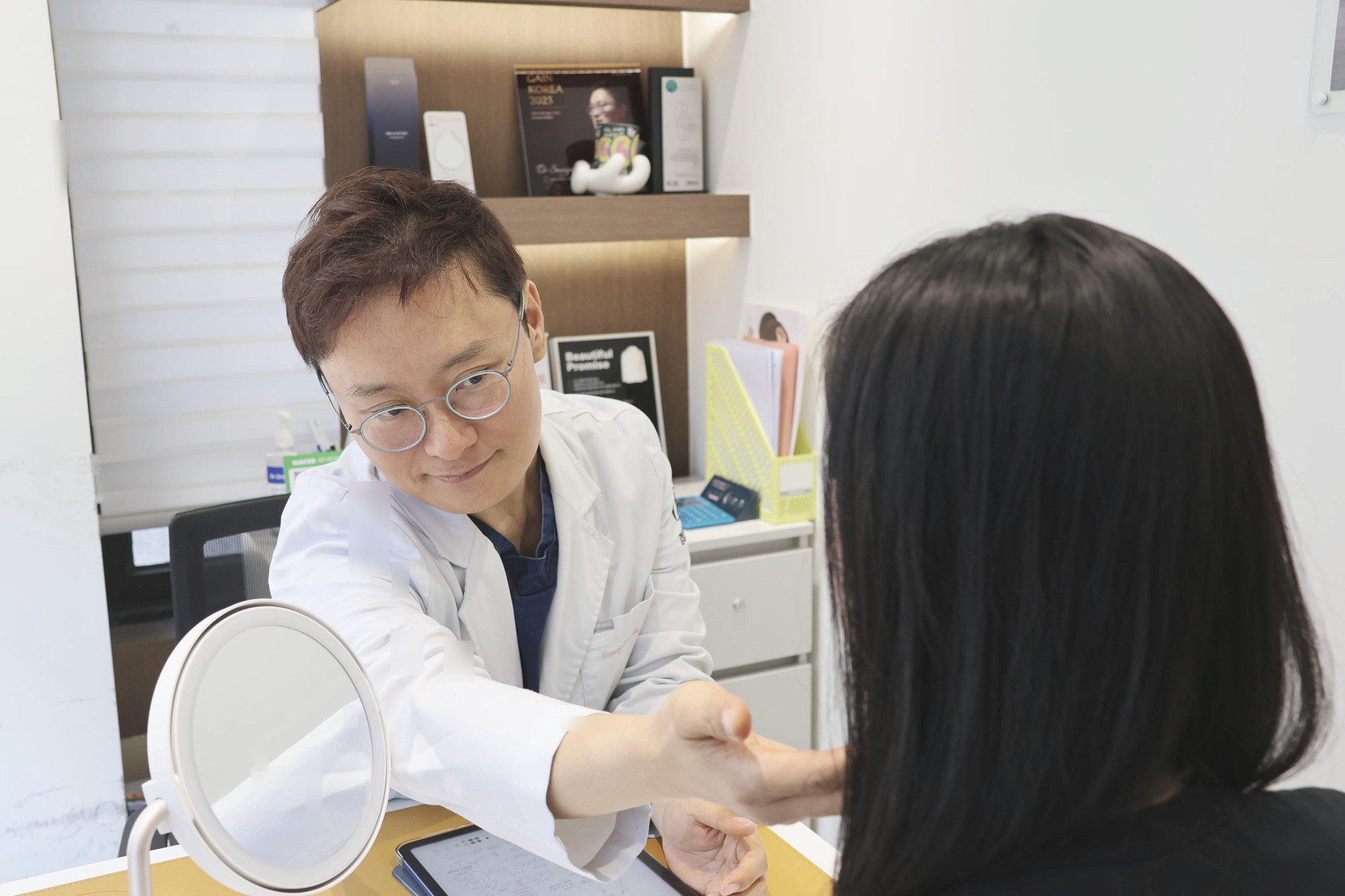
The second reason is distribution. Combining Juvelook Volume and Titanium lifting does not mean doing both at maximum output and maximum volume. Just as pouring in every good ingredient does not make a dish delicious, the result is decided by where and how much each is used.
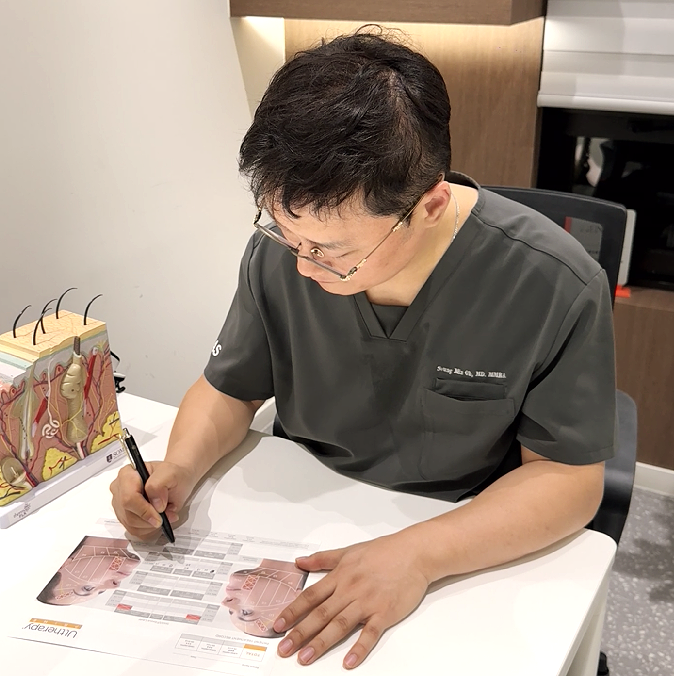
Before treatment, Dr. Oh divides the face into three zones and first separates where to work from where not to. The focus zone is where volume has disappeared, such as a hollowed side cheek or an empty area below the front cheek; here Juvelook Volume is central, and Titanium lifting heat is added toward a sagging jawline and contour.
Next is the protect zone. The temples and the area around the eyes have thin skin, blood vessels and bone close by, so the same treatment as elsewhere can cause a stronger reaction. Output is lowered and depth set separately in this zone, and people with dark melasma are included here as well, because the 755nm wavelength of Titanium lifting reacts with melanin and the way the laser is applied must be adjusted.
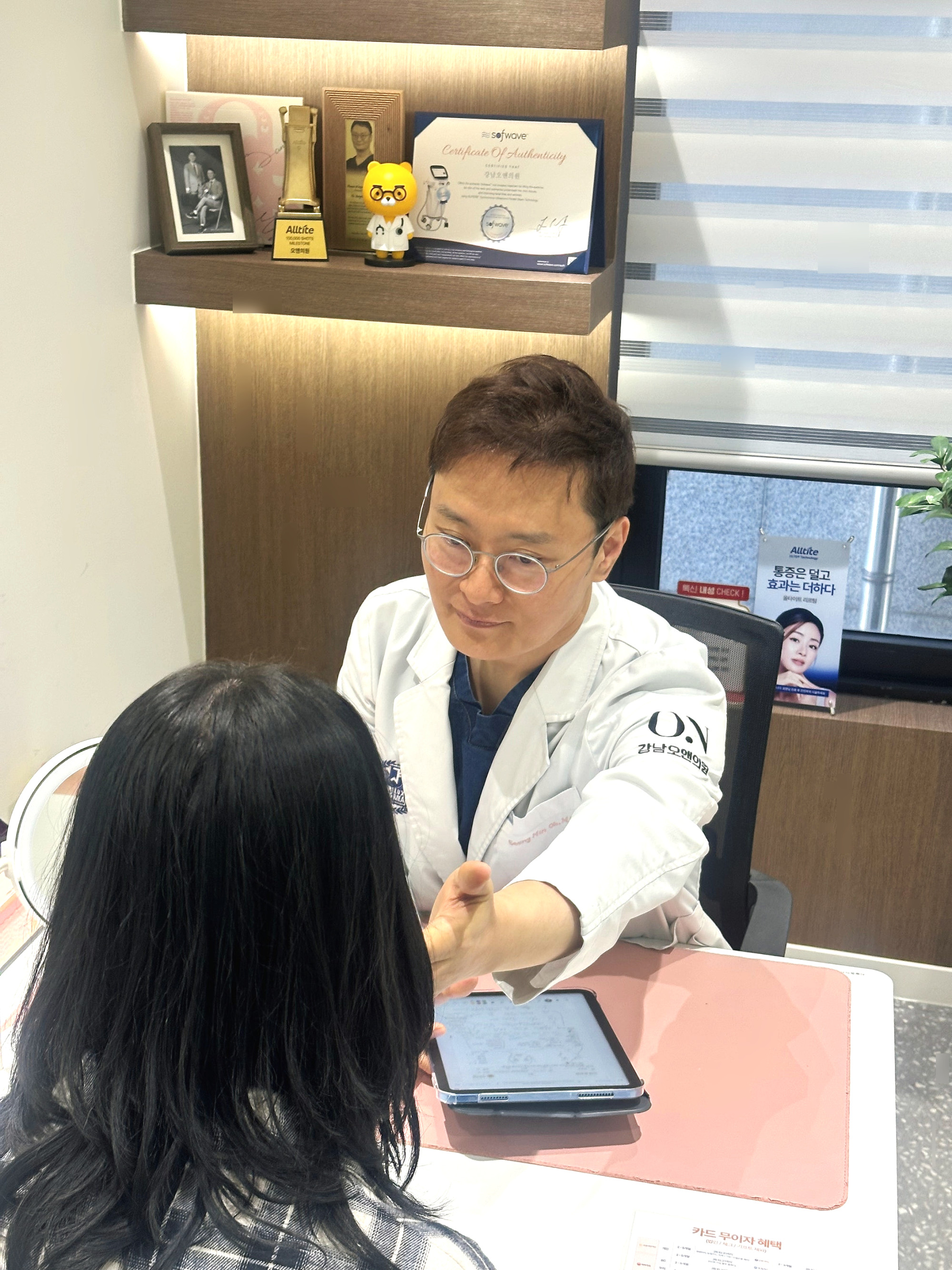
Last is the preserve zone, where volume is already sufficient and the lines are attractive. Unnecessary treatment here can make the face look wider or soften a person's unique impression, so the decision not to treat is also part of the plan. Much of a person's individuality lies in these areas.
Why intensity and amount are kept in check for hollow cheeks
For this reason, Titanium lifting is not applied at uniform output across the face for people with hollow cheeks, and Juvelook Volume is not filled beyond the depth of the hollow. The goal is not strong output or a generous volume, but a natural impression in which the whole face is in harmony.
If fixing one hollow cheek makes the surrounding area look unnatural, it simply adds another concern. Filling the depth with Juvelook Volume and firming the surface with Titanium lifting, while dividing the roles of the focus, protect and preserve zones precisely, tends to move hollow cheek improvement in a natural direction.
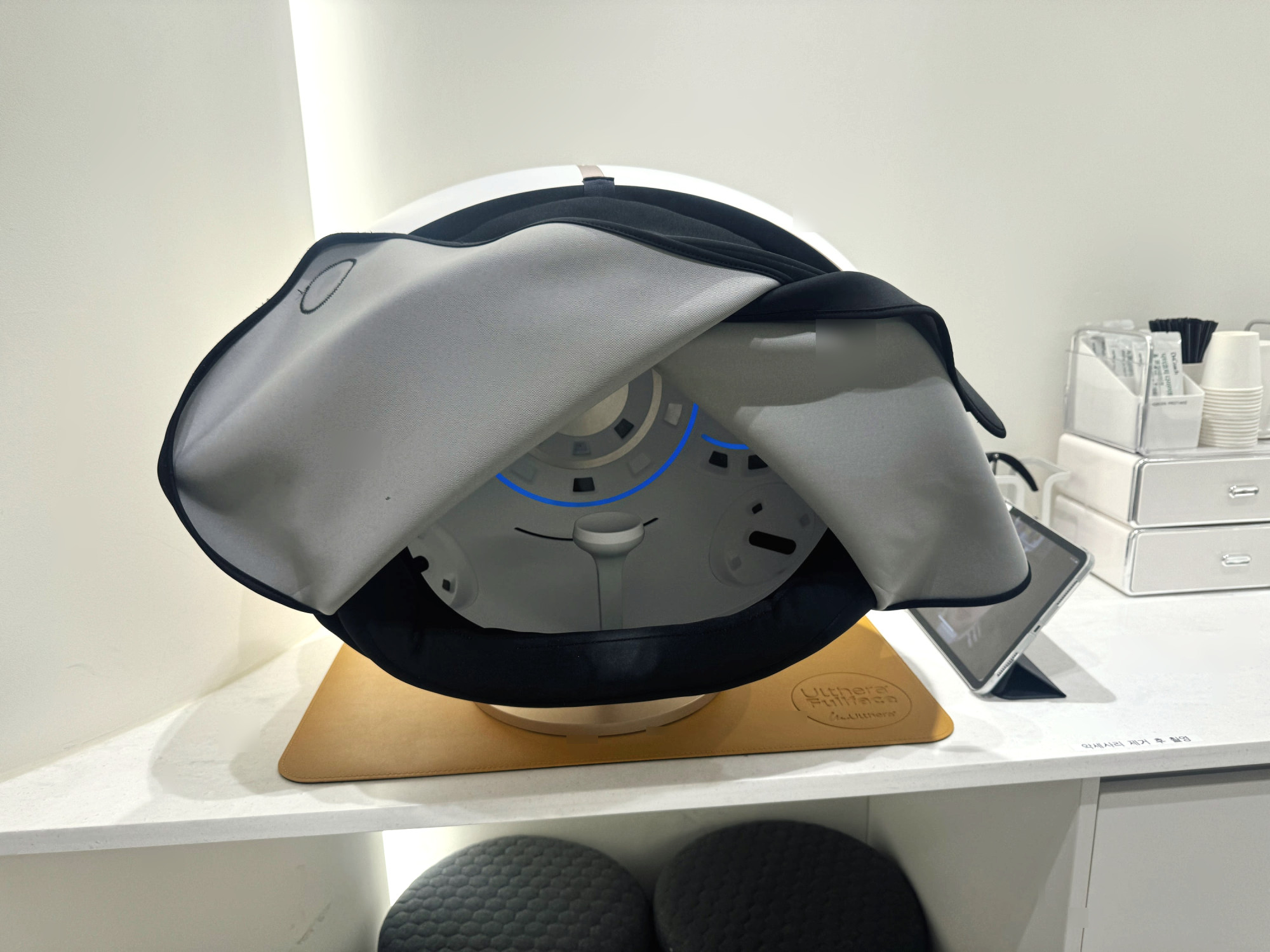
At O.N Clinic, skin density and skin thickness are measured before treatment with an AI skin analysis device called MUSE, and the doctor examines the face directly and maps out the three zones. Whether to do Juvelook Volume and Titanium lifting on the same day or split the schedule is decided by the skin condition that day. Because volume takes time to build, the next step is set while following the changes after treatment.
During consultation, ask which parts of your face should not be touched. That answer is where a sound plan for hollow cheeks truly begins.
Frequently asked questions
Is it true that lifting makes hollow cheeks worse?
If heat reaches an area lacking volume too strongly, the hollow can become more noticeable. Separating hollow areas from sagging areas and dividing the heat between them can help reduce this concern.
Is Juvelook Volume alone not enough? Do I really need Titanium lifting too?
When skin density is low, the edges can look blurred even after volume is added, so adding a step that firms the skin can help in some cases. Set the direction after checking both volume and skin condition.
Will my face look wider after hollow cheek treatment?
Injecting beyond the depth of the hollow or filling areas that already have plenty of volume can make the face look wider. Choosing only the necessary areas and matching the amount can ease that worry.
Visit and consultation
O.N Clinic is located near Gangnam Station, so it is relatively easy to reach by subway.
If you are considering hollow cheek treatment, it helps to note the area that looks most sunken, whether you have melasma and any previous volume or lifting treatments before your visit, so the consultation goes smoothly. For any questions, feel free to reach us via chat with us now.
Author: Dr. Oh Seung-min (Medical Director of O.N Clinic, graduate of Seoul National University College of Medicine, Academic Committee Chair of the Korean Society for Laser, Skin and Hair). See the full profile on the medical team page. First published 2026-10-22, last reviewed 2026-11-10
This article is for general information only, and suitable treatment and results may vary depending on each person's condition.