
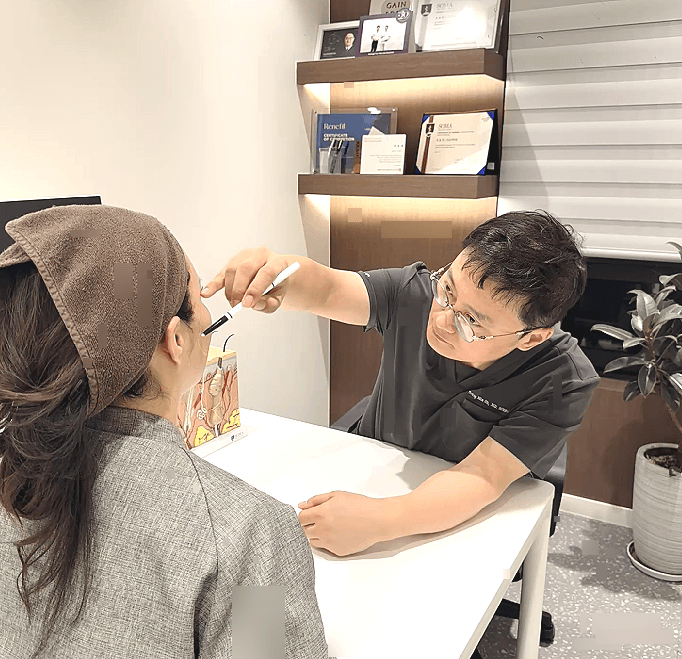
Key takeaway: Ultherapy, Thermage and Oligio XM are all good lifting devices, but they treat different layers, so it is more accurate to compare their effects by which layer they treat rather than by the strength of their energy. Pain also feels different depending on where and how the energy concentrates, so when choosing among Ultherapy, Thermage and Oligio XM, I recommend checking first the layer where your sagging began and the volume you need to preserve, rather than how much it hurts.
Why the dilemma deepens in front of Ultherapy, Thermage and Oligio XM
Choosing between jajangmyeon and jjamppong can be laughed off, but choosing a lifting device feels much harder. Reviews of Ultherapy, Thermage and Oligio XM all say the effect is good, each clinic recommends a different device, and accounts of pain vary from person to person.
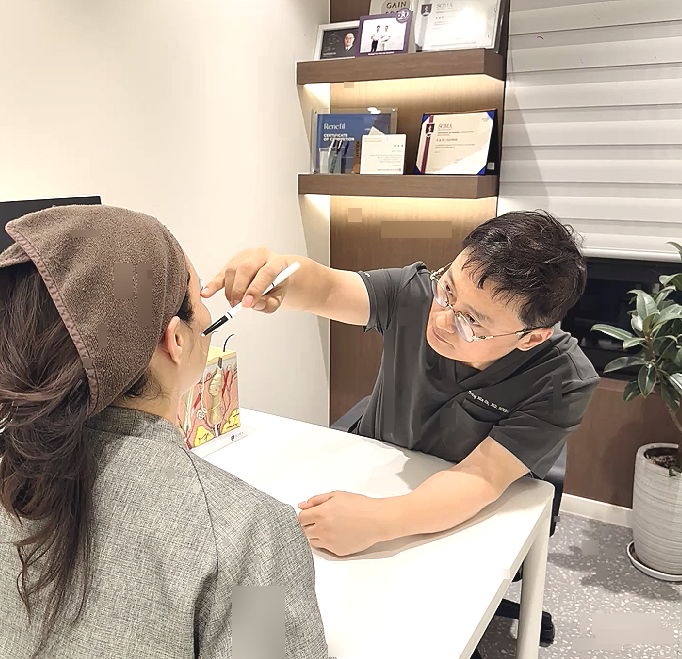
This article first summarizes what each of the three devices does well, then covers two standards to remember when comparing effect and pain, and finally introduces the order in which a device is chosen in actual practice.
Ultherapy and Thermage, each with its specialty
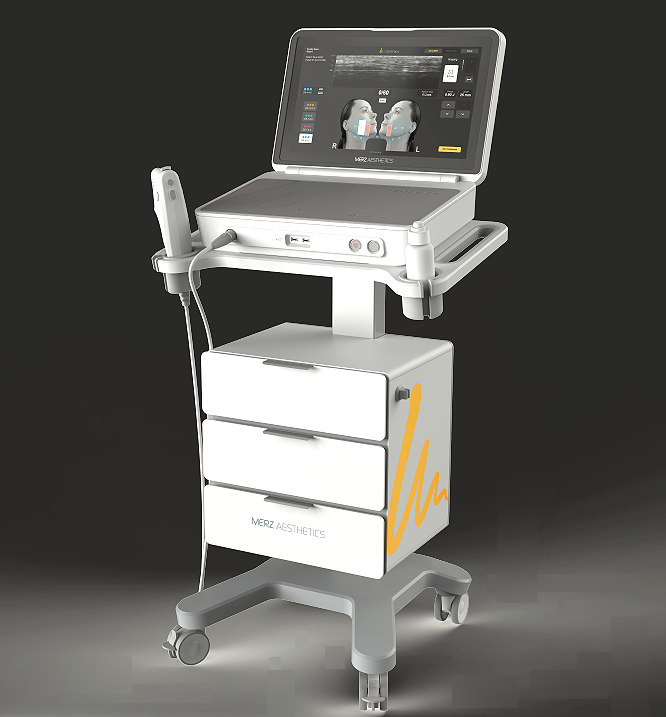
The energy source of Ultherapy Prime is high-intensity focused ultrasound (HIFU). It concentrates this ultrasound on a single point to reach the fascia layer (SMAS), and a distinctive feature of Ultherapy is that energy is delivered while watching the depth of the layers on the ultrasound image shown on the monitor. Ultherapy is therefore strong at precisely targeting sagging that starts in the lower layers.
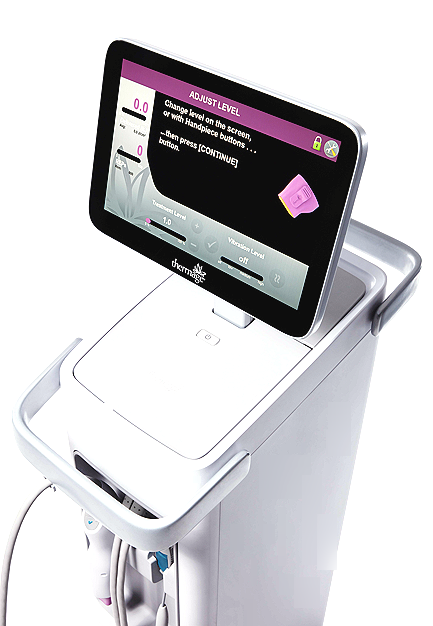
The energy source of Thermage FLX is monopolar radiofrequency (RF), which spreads heat evenly across the entire dermis. It is strong at tightening the skin while caring for elasticity and texture together, and another notable point is that Thermage FLX uses vibration and cooling together to reduce pain compared with the previous generation.
Oligio XM, radiofrequency and ultrasound in one device
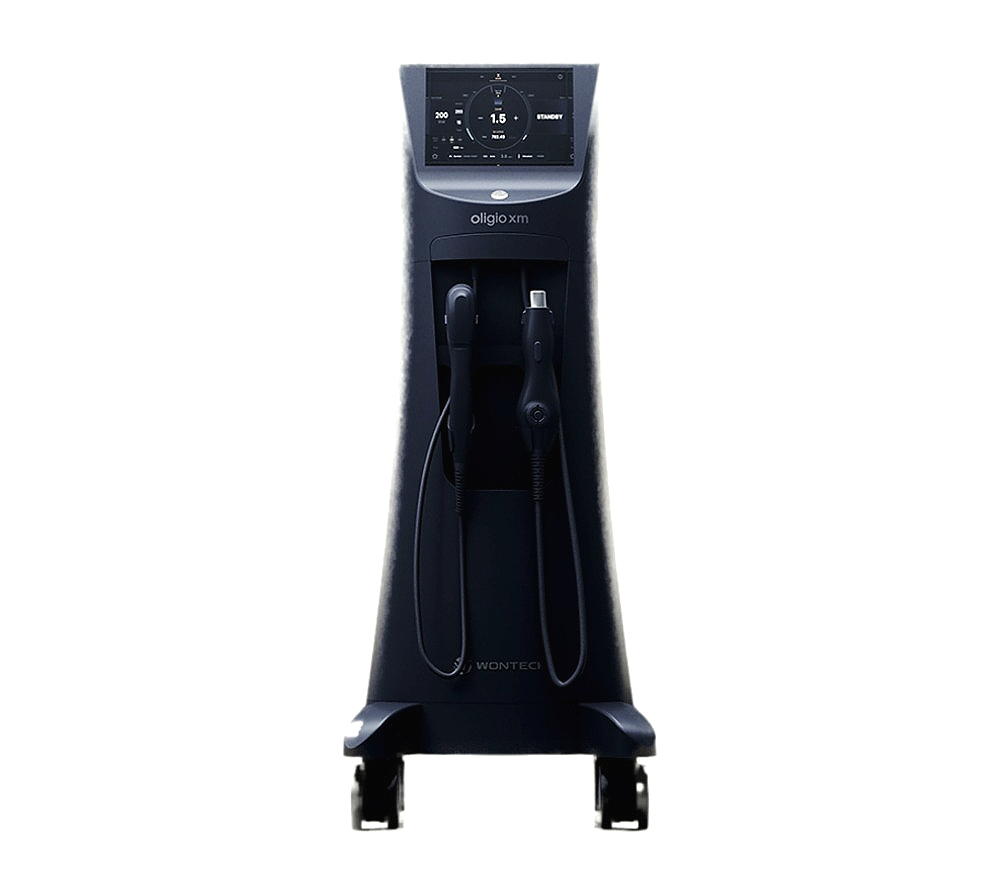
Oligio XM occupies a somewhat unique position among the three devices. Because both a radiofrequency tip and an ultrasound cartridge connect to a single Oligio XM, it treats the dermis with the radiofrequency G mode and X mode, and the deeper layers and fascia layer (SMAS) with the ultrasound 3.0 mode and 4.5 mode.
Its structure lets you select the right energy for each zone instead of swapping devices, much like a split bowl holding two dishes at once. For people whose dermal elasticity has declined and who also have deep sagging, the strength of Oligio XM is that both layers can be included in one treatment plan.
Compare effect by the layer treated, not by strength
There are two standards to hold onto when comparing the effects of Ultherapy, Thermage and Oligio XM. First, effect should be judged not by the size of the output but by the layer where the energy stays. I often receive requests for the device with the strongest energy, but delivering strong energy and suiting your face are separate matters.
Layers and devices pair up this way: if sagging started deep, Ultherapy Prime fits; if the problem is dermal elasticity and texture, Thermage FLX fits; and if the two overlap, Oligio XM fits. Even with the same lifting, an effect can be expected only when the layer where your concern lies matches the layer the device reaches.
Compare pain by how the energy concentrates

Second, pain differs less by device name than by where and in what shape the energy concentrates. Methods that gather ultrasound into points, like Ultherapy, may cause a brief stinging sensation at the moment a shot goes in, while radiofrequency that warms the dermis broadly, like Thermage, feels mainly like warm heat rather than stinging. Recent devices have kept evolving to ease pain by adding cooling, vibration and real-time monitoring.
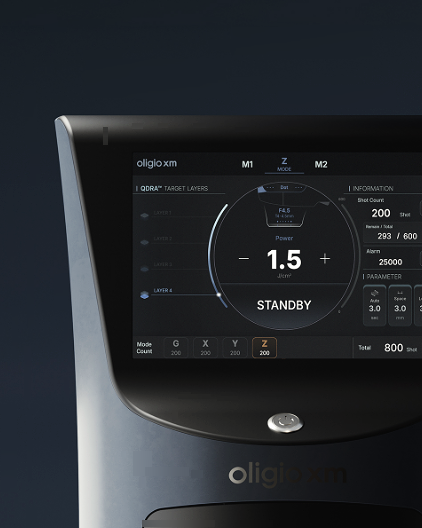
In the case of Oligio XM, cooling is repeated several times even while a single shot is delivered, and it is introduced as a device designed with care to reduce the sensation of the outer skin heating up. Still, the degree of pain felt varies considerably with the area, skin thickness and individual sensitivity.
The saying that the more it hurts the better it works is also far from the truth. What decides the result is whether an appropriate amount of energy reached the target depth, so I hope you will not choose among Ultherapy, Thermage and Oligio XM based on the amount of pain alone.
Looking at facial contours before device names
As you may have guessed by now, there is no fixed right answer in choosing a device. That is why I do not proceed right away just because someone asks for Ultherapy or says they will go with Thermage. For people whose cheeks already look hollow or whose side cheeks are sunken, I avoid from the outset any plan that puts deep-layer energy across the entire face, because if heat reaches volume that should be preserved, the hollowness can stand out more. Conversely, if someone whose jawline has dropped only repeats shallow-layer treatments, it may be hard to get the change they expect.
For this reason, at O.N Clinic, before deciding on a device, we look at the shape of the cheekbones and jawline, go through whether the cheeks are sunken, whether there is side cheek hollowing and where the sagging begins, and then add measurement with the AI skin analyzer MUSE. From those results I personally plan the device and depth for each area, and in some cases assign different devices to different zones of a single face. We also follow how the change settles after the procedure, and if you ask in the clinic whether lifting alone is enough for your cheeks, you will find the answer much faster.

In short, Ultherapy has its place in targeting deep sagging, Thermage in broadly firming dermal elasticity and texture, and Oligio XM in planning the dermis and the layers beneath it at once. Rather than one always being better, it is the layer where your facial concern lies that picks one of the three.
Frequently asked questions
My cheeks are naturally hollow. I worry they will look thinner after lifting
If a lot of deep-layer energy goes to an area whose volume should be kept, sunken spots can actually stand out. So we first measure how sunken the cheeks are and separate the areas to receive ultrasound from Ultherapy or Oligio XM from the areas to leave alone.
I am sensitive to pain. Is it okay for me to get lifting?
Even with the same device, how much it hurts changes with the shape in which energy concentrates, the treatment area and how thick the skin is. If you tell us about sensitive areas in advance, we can adjust the intensity and approach to ease the burden.
My jawline is sagging and my skin is dull. Do I have to choose just one device?
Jawline sagging is often a deep-layer issue and dullness a dermal issue, so a plan that treats both layers together can be made. There is also the option of dividing the work within one device, as with Oligio XM, and we decide what to do first and how far to go depending on which concern comes first.
Visiting and consultation
O.N Clinic is located near Gangnam Station, so it is fairly easy to reach by subway.
If you are wondering which of Ultherapy, Thermage and Oligio XM suits you, organizing before your visit the area that bothers you most, how sensitive you are to pain and what lifting you have had before makes the consultation smoother. If you have any questions, feel free to reach us through Chat with us now.
Written by Dr. Oh Seung-min (Representative Director of O.N Clinic, graduate of Seoul National University College of Medicine, Academic Committee Chair of the Korean Society for Laser, Skin and Hair). You can find his full background on the medical team page. First published 2026-10-13, last reviewed 2026-11-10
This article is for general information only, and the appropriate treatment and results may vary depending on each individual's condition.